High blood pressure has earned a reputation among doctors as a silent condition, and for good reason. Most people who have it feel completely normal, right up until it contributes to a much more serious event like a stroke or heart attack. Understanding what signs, if any, to watch for, and knowing your real risk factors, is one of the most valuable things you can do for your long-term health.
Just How Common Is This in Nigeria?
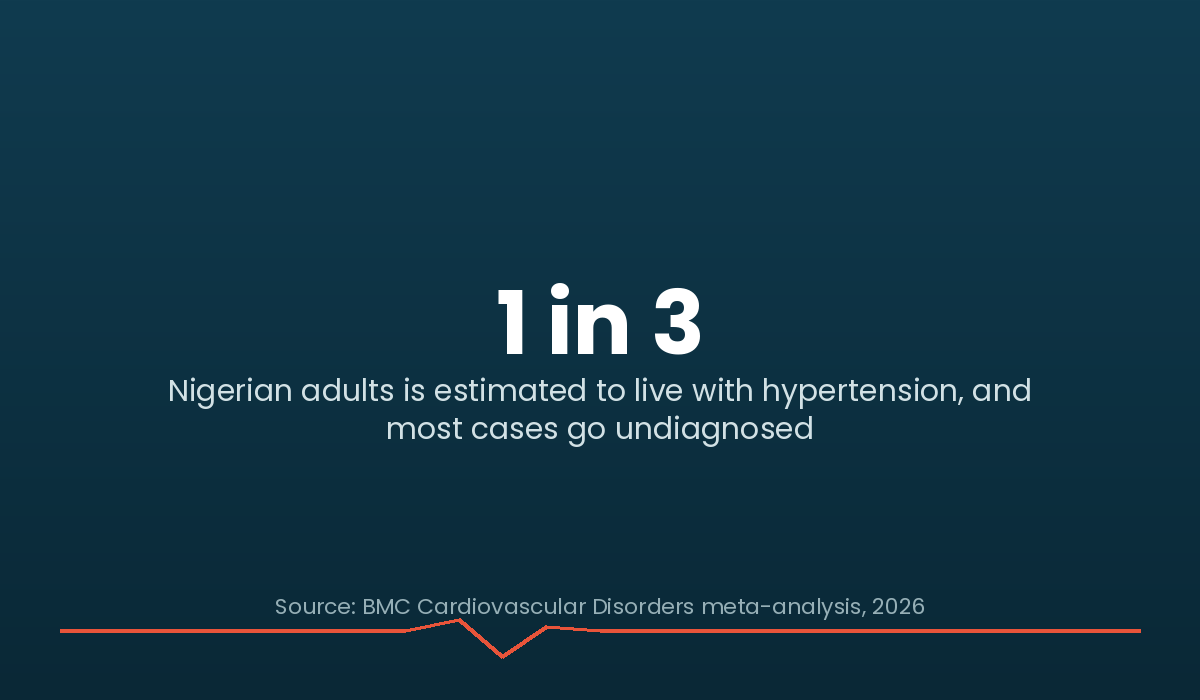
A recent systematic review and meta-analysis covering nearly 50,000 participants across Nigeria found a pooled hypertension prevalence of roughly 34 percent among Nigerian adults, meaning it affects somewhere around one in three adults nationwide (BMC Cardiovascular Disorders meta-analysis on hypertension prevalence in Nigeria). Just as concerning, awareness and treatment rates remain low across the country, meaning a large share of people living with hypertension do not yet know it. This combination, high prevalence and low awareness, is exactly why understanding the signs, and more importantly, the value of regular checking, matters so much.
The Uncomfortable Truth: Most Cases Have No Symptoms
Before listing possible warning signs, it is important to set realistic expectations. The vast majority of people with high blood pressure experience no noticeable symptoms at all, especially in its early stages. This is precisely why it is often called a silent condition, and why waiting for symptoms to appear before checking your blood pressure is a genuinely risky strategy. Regular measurement, not symptom-watching, is the reliable way to know your numbers.
Possible Warning Signs (Often Absent Entirely)
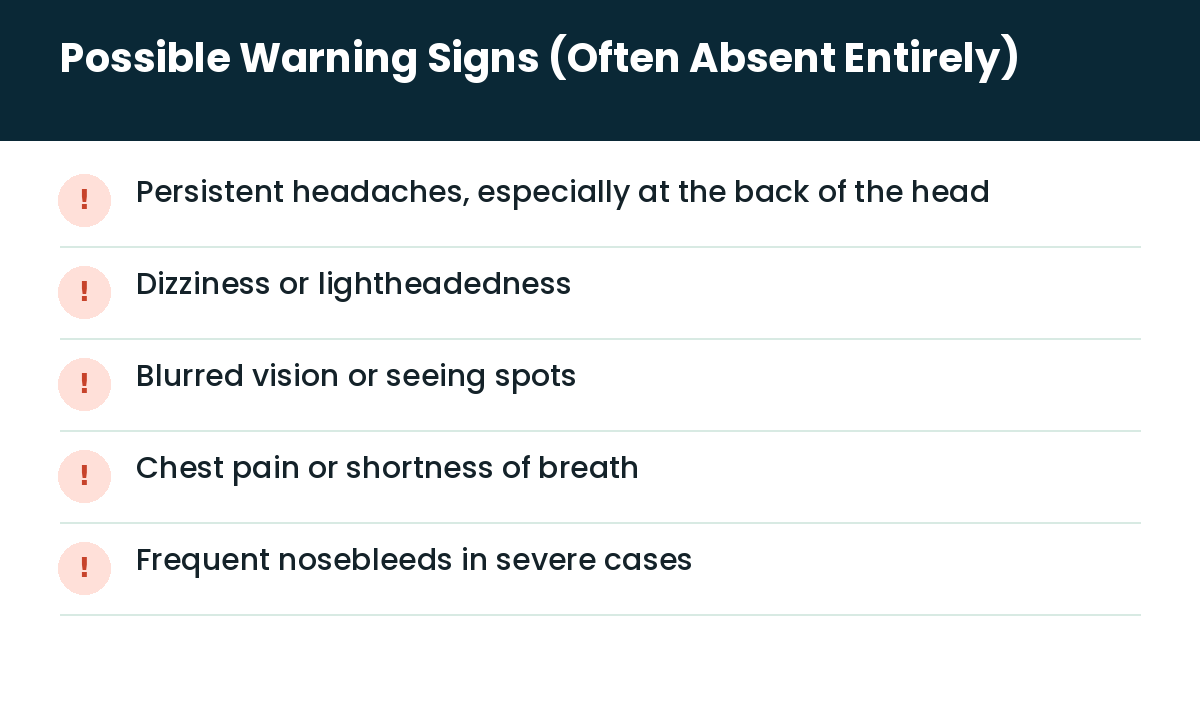
That said, in cases of very high or rapidly rising blood pressure, some people do experience noticeable symptoms. These can include persistent headaches, particularly at the back of the head, dizziness or lightheadedness, blurred vision or seeing spots, chest pain or shortness of breath, and in more severe cases, frequent nosebleeds. It is worth repeating that these symptoms typically only appear once blood pressure has become significantly elevated, and their absence does not mean your blood pressure is normal. If you experience chest pain, difficulty breathing, or sudden severe headache alongside a very high reading, this requires immediate emergency medical attention rather than home monitoring alone.
Risk Factors to Be Aware Of
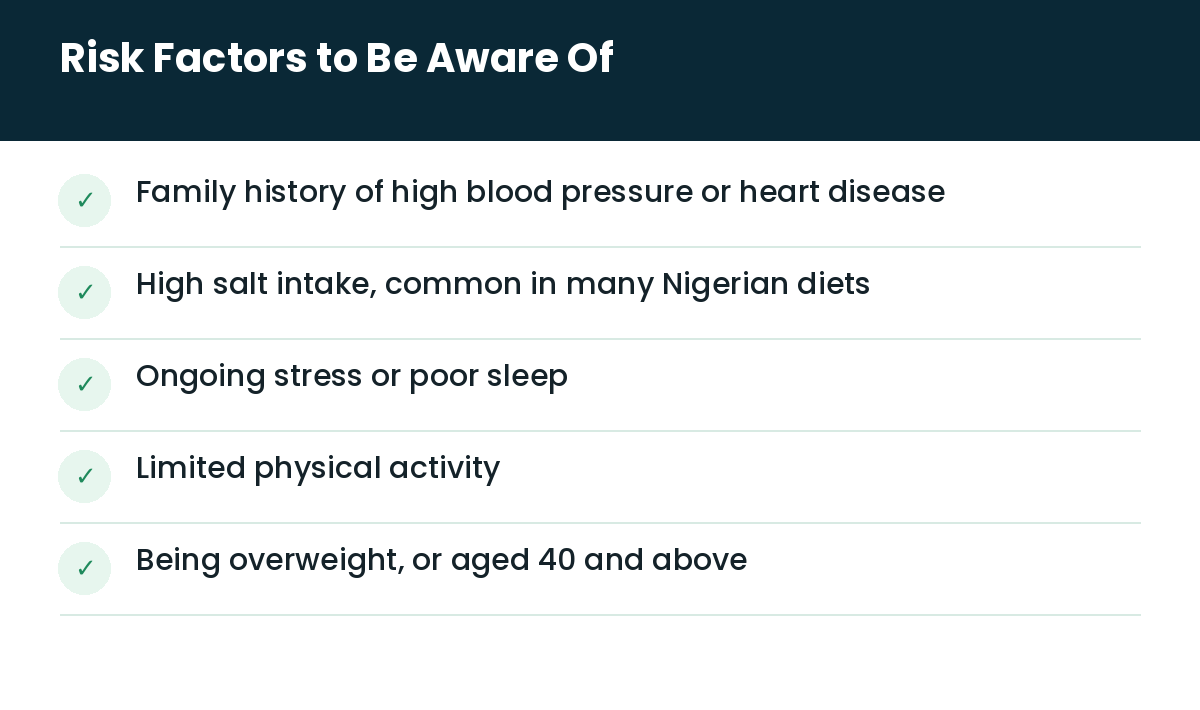
Certain factors increase your likelihood of developing high blood pressure over time. A family history of high blood pressure or heart disease raises your own risk meaningfully. High salt intake, common in many traditional Nigerian diets, is a well-established contributing factor recognized by health authorities worldwide (World Health Organization on hypertension). Ongoing stress and poor sleep quality both play a role as well. Limited physical activity is another significant contributor. And being overweight, or simply being aged 40 and above, both increase risk independent of other factors.
Why This Matters More in Nigeria Specifically
Beyond the sheer prevalence, several factors make awareness particularly important in the Nigerian context. Diets in many parts of the country tend to be high in sodium, from bouillon cubes and seasoning to preserved and processed foods. Urbanization has brought more sedentary lifestyles for many. And healthcare access, while improving, still means that many people go long stretches between clinic visits where a routine check might otherwise catch a rising trend early.
What You Can Actually Do About This
Given how common and how silent this condition is, the single most effective action available to most people is simply checking regularly rather than waiting for symptoms. A home wrist monitor removes the primary barrier to this, convenience, and lets you build a habit of genuine awareness rather than hoping symptoms will alert you if something is wrong. Beyond monitoring, straightforward lifestyle factors, reducing salt intake, staying physically active, managing stress, and maintaining a healthy weight, all meaningfully reduce your risk over time.
Talking About Blood Pressure Within Nigerian Families
Given how common hypertension is across the country, there is real value in normalizing conversations about it within families, rather than treating it as a private or embarrassing topic. Encouraging an older parent to check regularly, sharing your own readings openly, and treating a monitor as a normal household item rather than something only used after a diagnosis all help build a culture of awareness rather than avoidance. Many families only start paying attention after a health scare involving a relative, when earlier, ongoing awareness could have caught a concerning trend months or years sooner.
The Cost of Inaction Versus the Cost of Checking
It is worth putting the value of monitoring in perspective. A wrist blood pressure monitor is a modest, one-time purchase that can be used for years. Left undetected, high blood pressure contributes significantly to strokes, heart attacks, and kidney disease, conditions that carry an enormous personal and financial cost, both to the individual and their family. Framed this way, the small investment in a home monitor and the minor daily habit of checking are difficult to argue against, given what they help protect against.
Taking the First Step
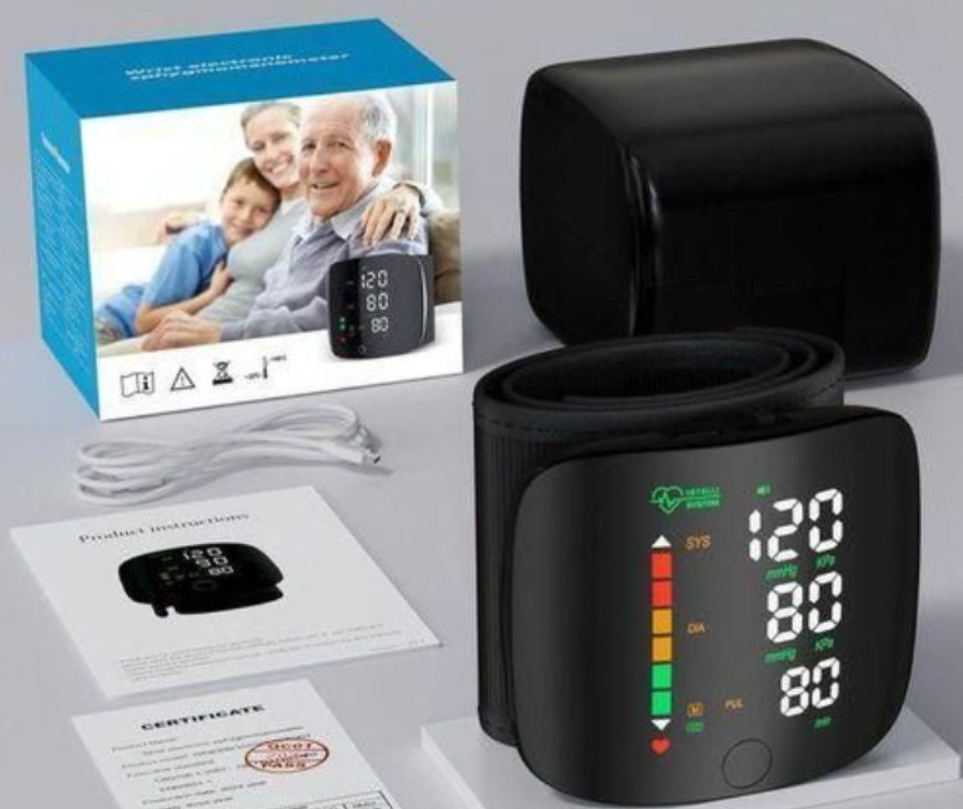
If you do not currently own a way to check your blood pressure at home, this is genuinely one of the highest-value health purchases you can make, given how common and how silent hypertension is across Nigeria. Our Digital Wrist Blood Pressure Monitor makes starting this habit simple, with one-touch automatic readings and a memory function to track your numbers over time. For households wanting the same reliability while traveling, our Portable Digital Wrist Blood Pressure Monitor is built for exactly that, and our standard Wrist BP Monitor offers a dependable everyday option.
Frequently Asked Questions
If I have no symptoms at all, is it still worth checking regularly? Yes, absolutely. The absence of symptoms is exactly why regular checking matters so much, since the vast majority of people with high blood pressure feel completely normal until it has progressed significantly.
At what age should I start regularly checking my blood pressure? Many health authorities recommend regular checking from adulthood onward, with increased attention from around age 40, though checking earlier is reasonable too, particularly with a family history of hypertension or heart disease.
Can stress alone cause permanently high blood pressure? Chronic, ongoing stress can contribute to sustained elevated blood pressure over time, though it typically works alongside other factors like diet and activity level rather than acting entirely alone.
Is high blood pressure reversible with lifestyle changes? For many people, especially in earlier stages, meaningful lifestyle changes can significantly improve blood pressure numbers over weeks to months. Some people still require medication alongside lifestyle changes, which is a conversation to have with a doctor based on your specific numbers and health history.
Should I be worried about a single high reading? Not automatically. Blood pressure fluctuates naturally, and a single elevated reading is not the same as a diagnosis. What matters is the pattern over multiple readings across several days, which is exactly why regular home monitoring is so valuable.
Are certain ethnic groups or regions in Nigeria more affected than others? Research has shown some variation across regions and groups within Nigeria, though the underlying message remains the same everywhere, hypertension is widespread enough nationally that regular checking is worthwhile for nearly everyone, regardless of background or location.
This article provides general health information and is not a substitute for professional medical advice. If you have concerns about your blood pressure or overall health, please consult a doctor. For more health awareness content like this, visit the ClinicAid blog.

Digi Clinicaid Nigeria Ltd is an online medical marketplace in Nigeria.