Owning a wrist blood pressure monitor solves the access problem, but it raises a new question almost immediately: how often should you actually use it? Check too rarely and you miss the trends that make home monitoring valuable in the first place. Check obsessively and you risk unnecessary anxiety over normal daily fluctuation. Here is a sensible, practical approach based on your specific situation.
There Is No Single Universal Answer
Before getting into specifics, it is worth being clear that the right frequency depends heavily on your individual circumstances, particularly whether you have a diagnosed condition, are on medication, or are simply monitoring for general awareness. What follows are reasonable, commonly recommended starting points, not a rigid rule that applies identically to everyone.
Recommended Checking Frequency by Situation
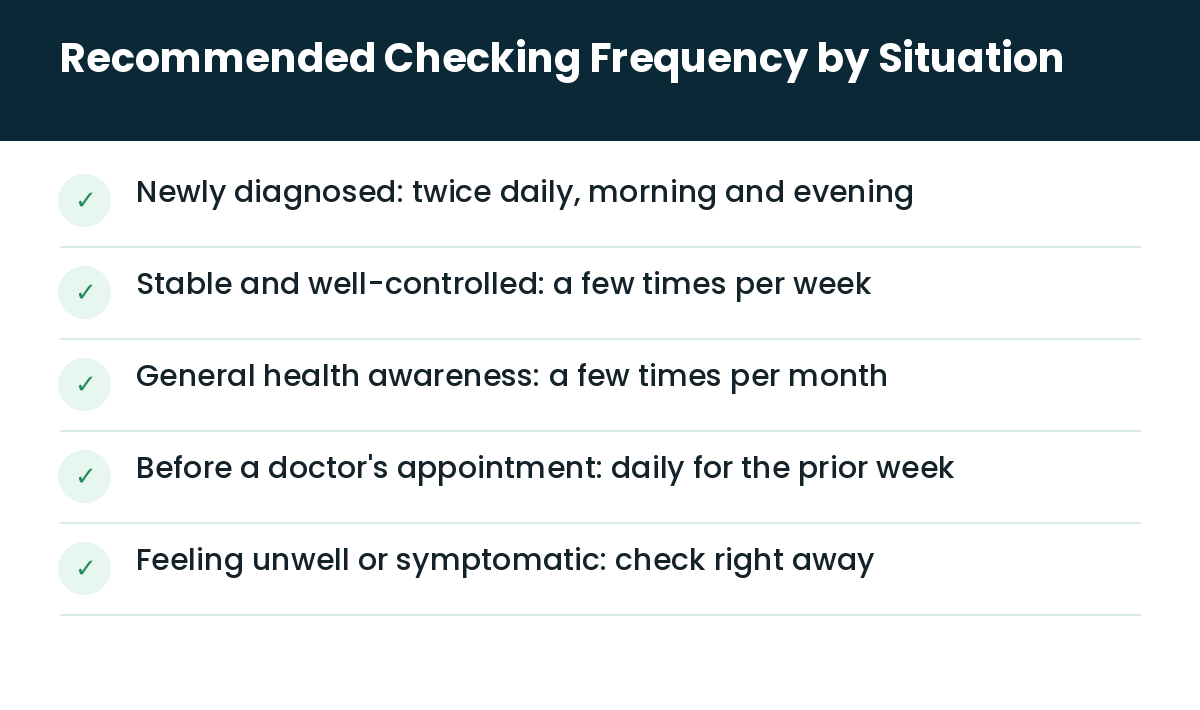
If you have been newly diagnosed with high blood pressure, checking twice daily, morning and evening, is a commonly recommended starting point, since it gives you and your doctor a rich enough picture to understand how your numbers behave and respond to any treatment changes (American Heart Association on home blood pressure monitoring). If your blood pressure is stable and well-controlled, perhaps under a doctor’s ongoing care, checking a few times per week is often sufficient to confirm things remain on track without turning monitoring into a daily chore. If you are checking purely for general health awareness, without any diagnosis or specific concern, a few times per month is a reasonable habit that still gives you useful long-term data. In the week before a scheduled doctor’s appointment, checking daily can provide your doctor with a fresh, detailed snapshot to discuss. And if you ever feel unwell or notice symptoms like dizziness or headaches, checking right away, regardless of your usual routine, is always sensible.
A Simple Daily Routine
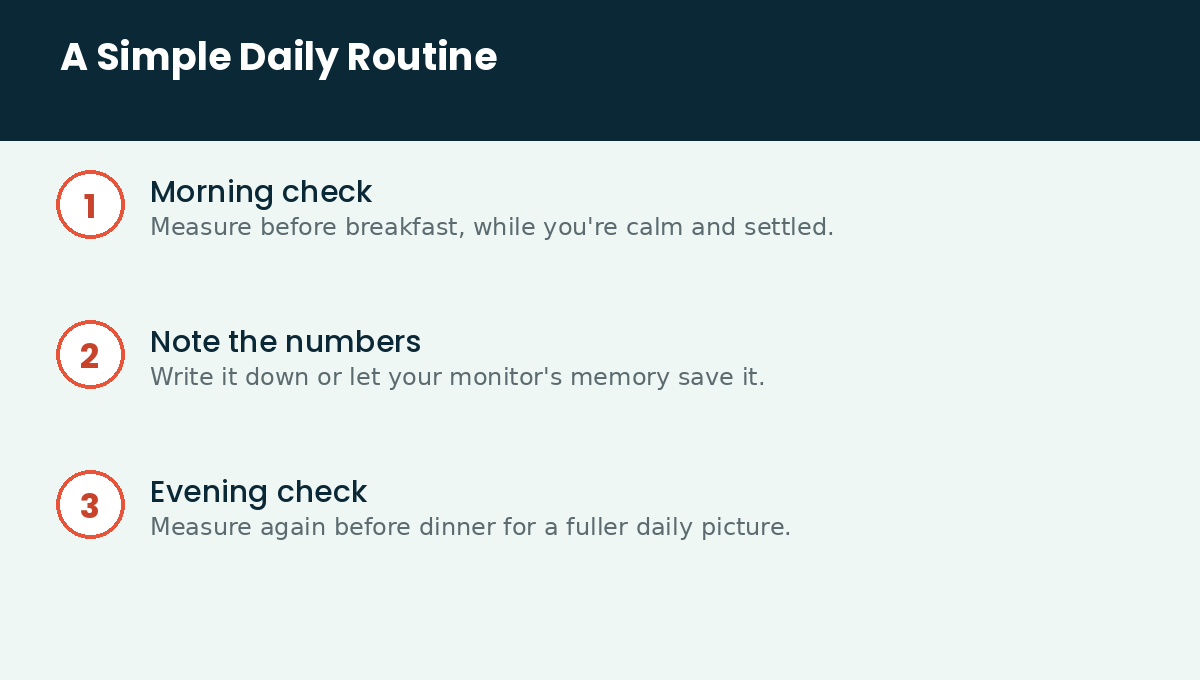
For anyone monitoring regularly, a simple twice-daily pattern works well for most people. Take a morning reading before breakfast, while you are still calm and settled from sleep, before the day’s stress and activity have had a chance to influence your numbers. Note your reading, either writing it down or relying on your monitor’s built-in memory function. Then take a second reading in the evening before dinner, which rounds out your daily picture and helps reveal patterns that a single morning reading alone would miss.
Signs You Should Check More Often
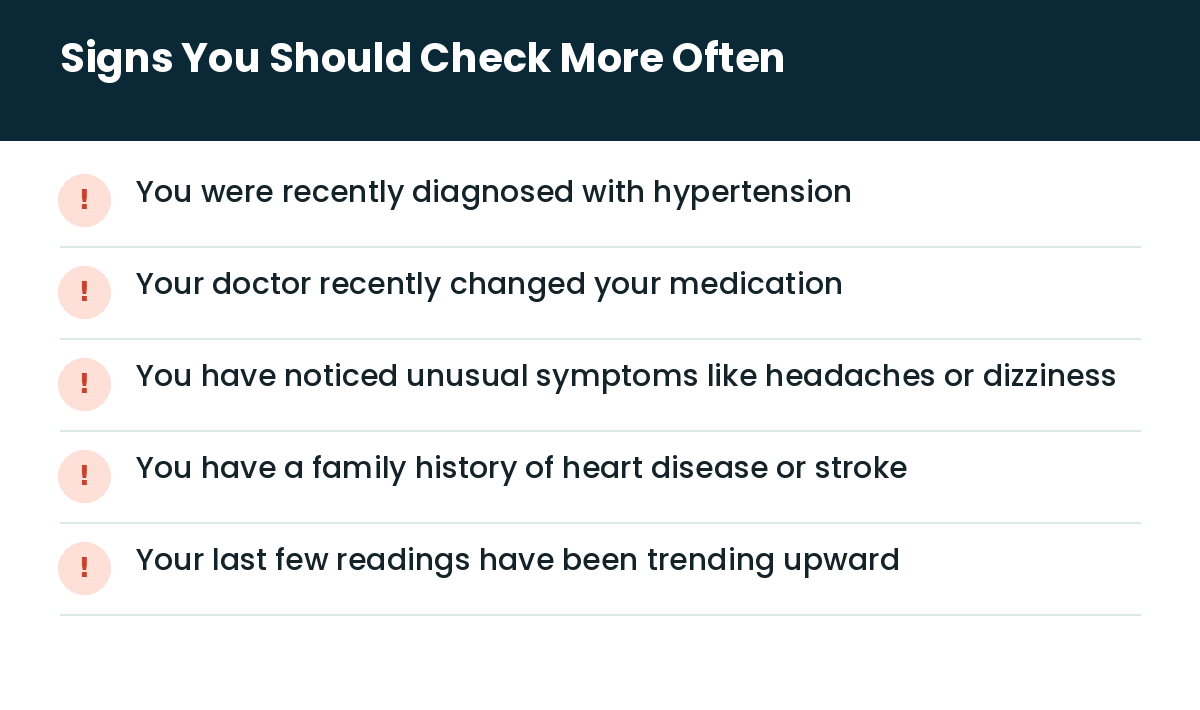
Certain situations are a good reason to temporarily increase how often you check, even if you normally monitor less frequently. Being recently diagnosed with hypertension is one clear trigger. A recent change in medication is another, since your doctor will want to see how your body responds. Noticing unusual symptoms like persistent headaches or dizziness warrants closer attention. Having a family history of heart disease or stroke is a reasonable reason to be more vigilant generally. And if your last few readings have shown a clear upward trend, checking more frequently for a period helps confirm whether that trend is genuine or just normal daily variation.
Avoiding Over-Monitoring
It is worth acknowledging the other end of the spectrum too. Checking excessively, multiple times an hour out of anxiety rather than medical necessity, is rarely helpful and can sometimes make people more anxious rather than more informed, since blood pressure naturally fluctuates throughout the day even in perfectly healthy people. If you find yourself checking compulsively and feeling more distressed rather than reassured by the process, it is worth discussing this pattern with a doctor, since the goal of home monitoring is genuine insight, not a source of ongoing stress.
Building Consistency Over Perfection
The most valuable home blood pressure data comes from consistency over time, not from checking as often as technically possible. A steady routine of checking at the same times each day, even if that is just once daily, gives you and your doctor a far clearer picture than sporadic, irregular checks at random times, regardless of how frequent those irregular checks might be in total.
What Doctors Actually Look For in Your Log
When you bring your home readings to a doctor’s appointment, what tends to matter most is not any single dramatic number, but the overall pattern across your readings, how stable they are, whether there is a clear upward or downward trend, and how they relate to any symptoms, medication changes, or lifestyle shifts during that period. This is exactly why consistency in your checking routine matters so much. A log with regular, predictable readings taken at similar times each day gives your doctor far more to work with than scattered, irregular readings taken only when you happened to remember.
Adjusting Your Routine Over Time
Your ideal checking frequency is not necessarily fixed forever. Many people start with more frequent checking after a new diagnosis, then gradually settle into a lighter routine once their numbers stabilize and their doctor is satisfied with their progress. Others increase frequency temporarily around specific events, a stressful period at work, a change in diet, or a new medication, then return to their normal routine afterward. Treat your checking frequency as something you can sensibly adjust based on your current situation, rather than a rule you must follow rigidly regardless of changing circumstances.
A Monitor Built for Daily Habits
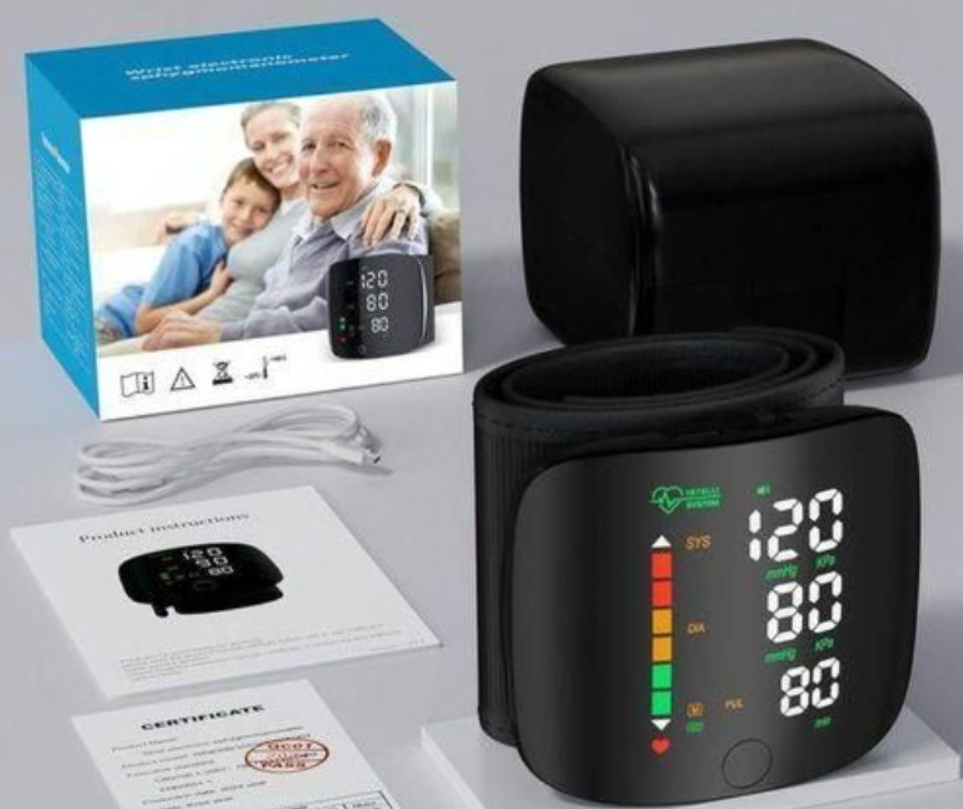
Our Digital Wrist Blood Pressure Monitor includes a memory function specifically designed to support a regular checking routine, storing your history automatically so you always have a real record to look back on or share with your doctor. For monitoring on the move, our Portable Digital Wrist Blood Pressure Monitor keeps the same routine going even while traveling, and our standard Wrist BP Monitor supports dependable everyday tracking.
Frequently Asked Questions
Is it bad to check my blood pressure only once a week? Not necessarily, particularly if you are simply monitoring for general awareness without a specific diagnosis or concern. Once weekly is still more data than most people ever collect, and it is far better than not monitoring at all.
Should I check before or after taking my blood pressure medication? This depends on what you and your doctor are trying to learn from the reading. Some people check before medication to see their baseline, others check afterward to confirm the medication is working. If you are unsure, ask your doctor which approach fits your specific treatment plan.
Can checking too often actually harm me? Checking itself carries no physical risk, but excessive checking driven by anxiety can affect your mental wellbeing and, in some cases, lead to overreacting to normal daily fluctuation. Moderation and consistency matter more than frequency alone.
Do I need to check at exactly the same time every day? It helps to be reasonably consistent, since blood pressure naturally varies throughout the day, but it does not need to be to the exact minute. Aiming for roughly the same general time each day is sufficient for meaningful tracking.
What should I do with my readings once I have collected them? Bring them to your next doctor’s appointment, either as a written log or through your monitor’s memory function, so your doctor has real data to review rather than relying solely on the single reading taken during your visit.
Does the frequency guidance change for pregnant women monitoring blood pressure? Pregnancy often involves closer blood pressure monitoring due to specific risks like preeclampsia, so it is best to follow your doctor or midwife’s specific recommended frequency rather than the general guidance in this article.
For more guidance on building a healthy monitoring habit, visit the ClinicAid blog.

Digi Clinicaid Nigeria Ltd is an online medical marketplace in Nigeria.