Of everything that affects the accuracy of a wrist blood pressure reading, the fit of the cuff itself is one of the most overlooked. People often focus on posture, timing, and technique, all genuinely important, while giving little thought to whether the cuff is actually sitting correctly on their wrist. Get the fit wrong, and even perfect technique elsewhere will not save you from an inaccurate reading. Here is exactly how to get it right.
Why Cuff Fit Matters So Much
The cuff is not just a strap holding the device in place, it is the mechanism that actually measures the pressure in your artery as it inflates and deflates. If it sits too loosely, it cannot apply even, consistent pressure, leading to unreliable readings. If it is too tight, it can restrict blood flow in a way that also distorts the measurement. If it sits in the wrong position on your wrist, it may not be measuring over the artery accurately at all. Fit is not a minor detail, it is foundational to whether your reading means anything.
How to Fit Your Wrist Cuff Correctly
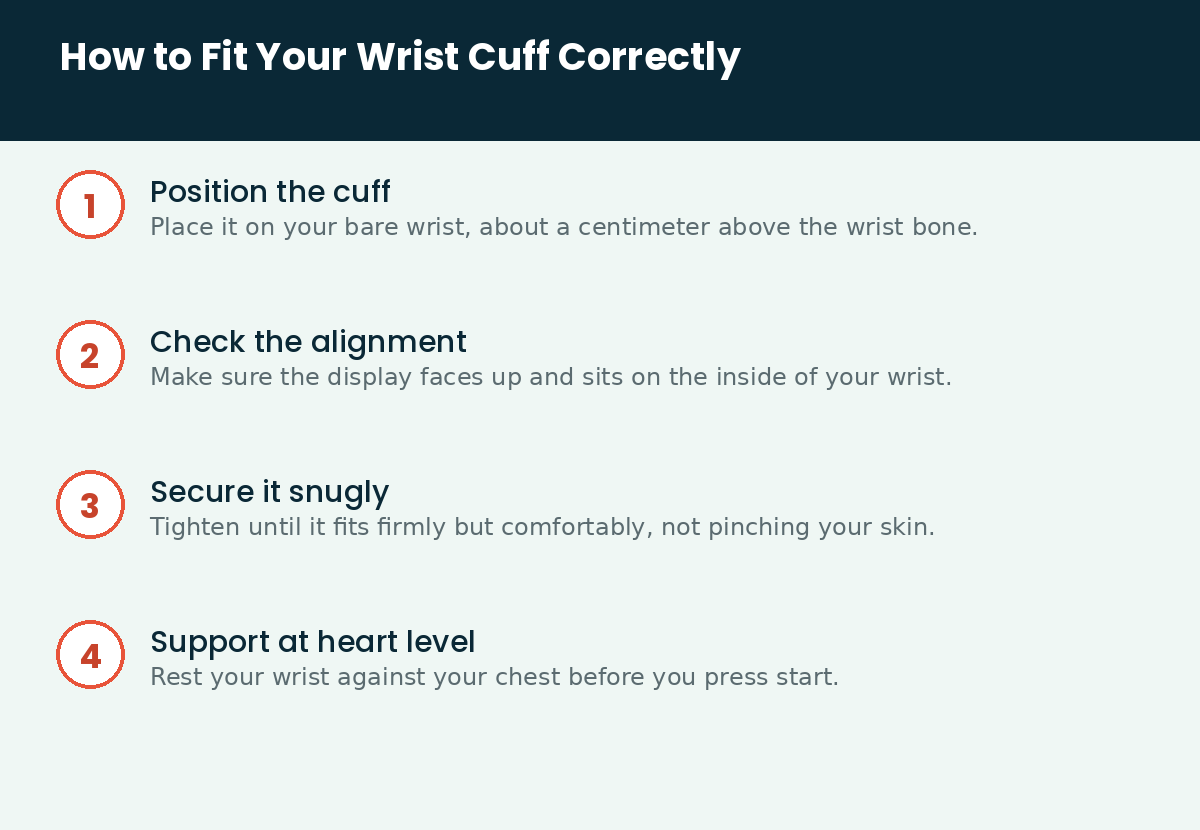
Start by positioning the cuff on your bare wrist, roughly a centimeter above the wrist bone, following the placement guide usually printed directly on the cuff. Check the alignment so the display faces upward and sits on the inside of your wrist, where you will naturally be able to read it once your wrist is positioned against your chest. Secure the cuff snugly, firm enough that it will not slide during measurement, but not so tight that it pinches your skin or feels uncomfortable. Finally, support your wrist against your chest at heart level before you press start, since even a perfectly fitted cuff will give you a misleading reading if it is not positioned correctly relative to your heart during measurement.
Common Cuff Fit Mistakes
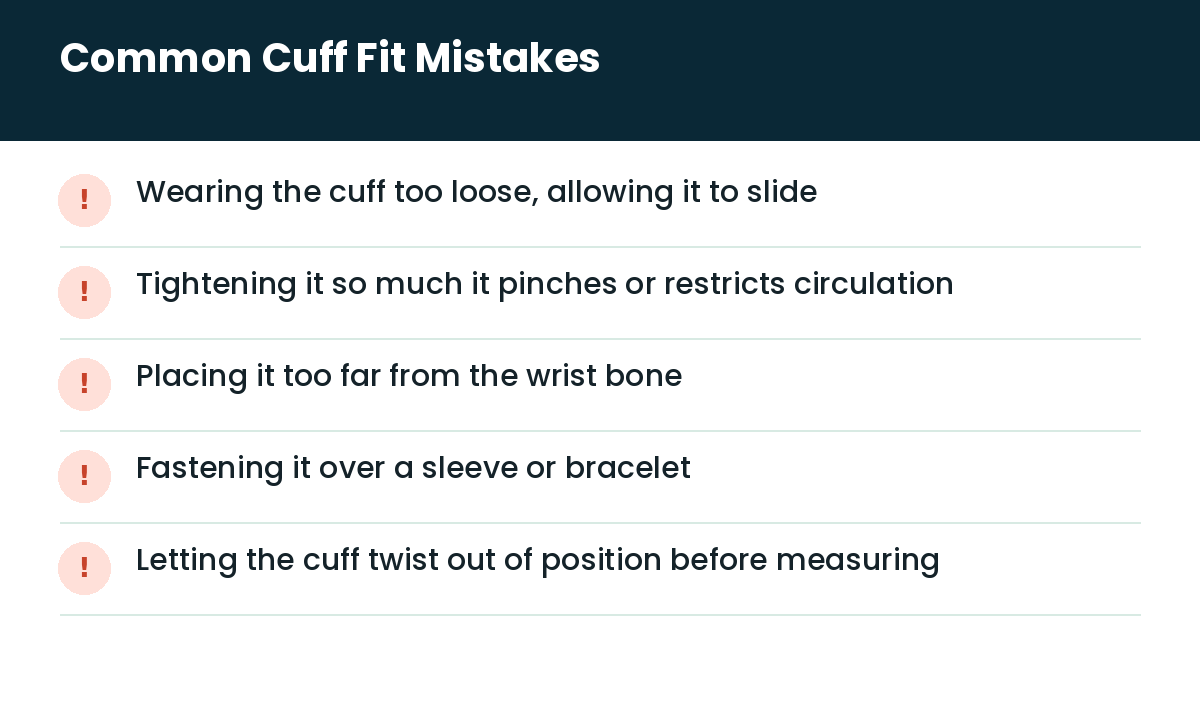
Several fit-related mistakes come up again and again with first-time users. Wearing the cuff too loose allows it to slide during inflation, throwing off the reading. Overtightening it can pinch the skin or restrict circulation, which is uncomfortable and can also distort your numbers. Placing it too far from the wrist bone, either too high up the forearm or too low over the hand, moves it away from the intended measurement point. Fastening it over a sleeve, bracelet, or watch interferes with an accurate reading entirely. And letting the cuff twist out of position, which can happen if you move your arm around while getting settled, means it may not be sitting flat and even by the time you actually start measuring.
Signs Your Cuff Fits Properly
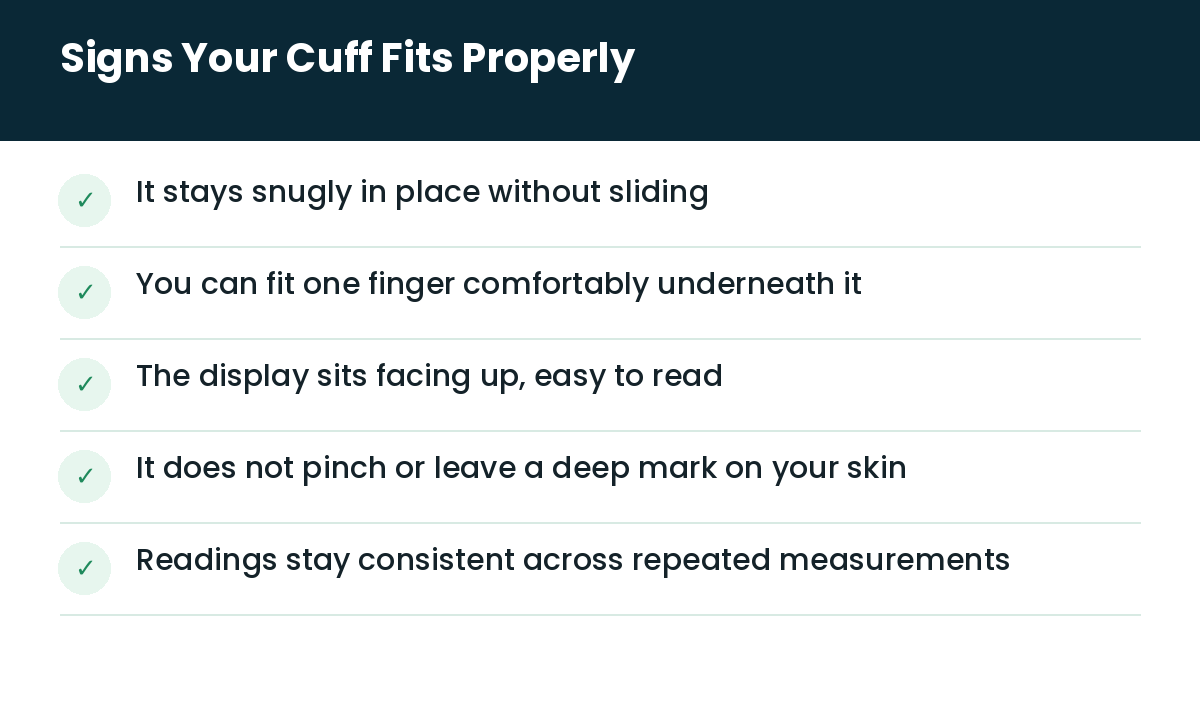
You can tell your cuff is fitted well if it stays snugly in place without sliding once secured. A simple test is checking whether you can comfortably fit one finger underneath it, snug but not restrictive. The display should sit facing up, easy to read without twisting your wrist awkwardly. It should not pinch or leave a deep, uncomfortable mark on your skin after use. And perhaps the most practical sign of all: your readings stay reasonably consistent across repeated measurements taken a minute or two apart, which suggests the cuff is doing its job reliably each time.
What to Do If the Standard Fit Feels Wrong
Most adjustable wrist cuffs, including the one on our own monitors, are designed to comfortably fit the wrist sizes of the vast majority of adults. If you have an unusually small or large wrist and the standard adjustment range does not feel right even at its loosest or tightest setting, it is worth reaching out to the seller for guidance before assuming the device itself is faulty. In rare cases, an alternative cuff size or an arm monitor may be a better fit for your specific body.
Fit Affects More Than Just Accuracy
Beyond accuracy, a properly fitted cuff also affects how comfortable and sustainable your monitoring habit is over time. A cuff that pinches or feels awkward every time you use it makes you less likely to check consistently, which undermines the entire purpose of home monitoring. Taking the extra thirty seconds to get the fit right each time is a small investment that pays off both in data quality and in how likely you are to actually keep up the habit long term.
Checking Your Fit Before Every Single Use
Even once you have found the right adjustment setting, it is worth briefly checking the fit each time you measure rather than assuming it stayed exactly the same from your last use. Cuffs can shift slightly if stored loosely, and a quick check, does it still sit snugly, does the display still face up correctly, takes only a few seconds but helps ensure every reading starts from a reliable foundation. This small habit matters more than it might seem, since a cuff that fit perfectly yesterday can easily be slightly off today if it was not stored carefully.
The Relationship Between Fit and Long-Term Trust in Your Device
Many people who conclude that their wrist monitor is “just not accurate” have actually been dealing with a fit issue rather than a device problem all along. Before assuming a monitor is faulty or unreliable, it is always worth revisiting the basics of fit covered in this guide, since correcting even one of these common mistakes can transform a monitor that felt inconsistent into one that produces genuinely trustworthy numbers every time.
Choosing a Monitor With a Reliable Cuff
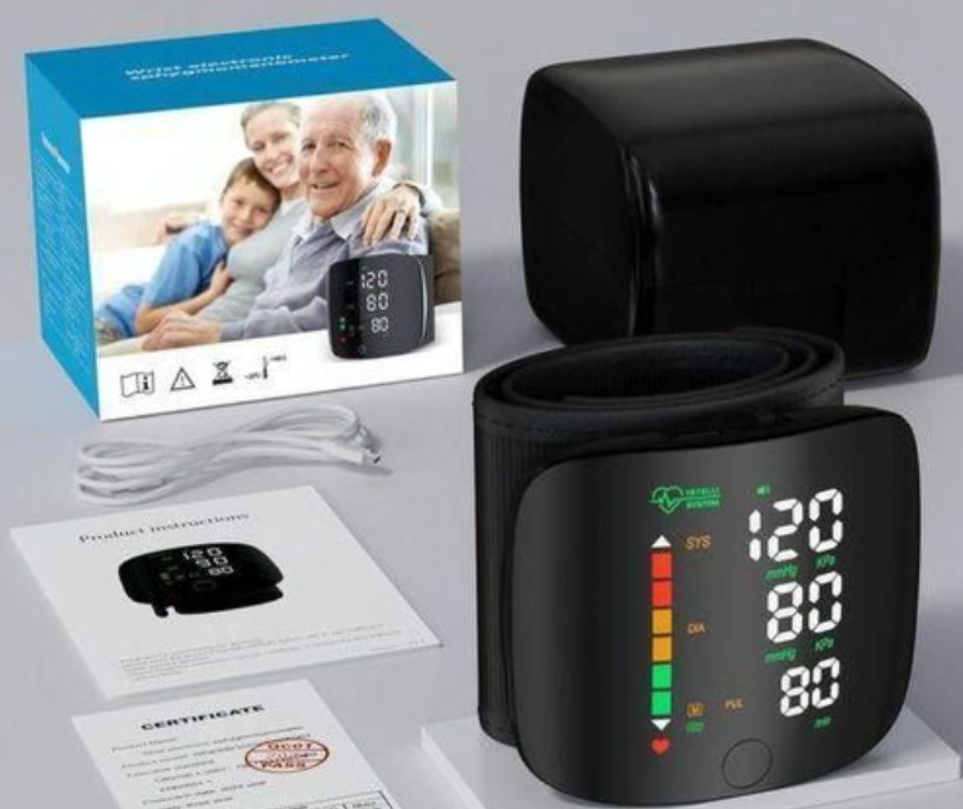
Our Digital Wrist Blood Pressure Monitor features an adjustable cuff specifically designed to fit comfortably and securely across a wide range of adult wrist sizes, reducing the fit-related errors covered in this guide. The same reliable cuff design carries through to our Portable Digital Wrist Blood Pressure Monitor for those who need it on the move, and our standard Wrist BP Monitor for everyday home use.
Frequently Asked Questions
How do I know if my wrist is too large or too small for a standard cuff? Most adjustable cuffs cover a wide range, generally suitable for the vast majority of adult wrists. If the cuff cannot close comfortably even at its loosest setting, or remains loose even at its tightest, your wrist may fall outside the standard range, and it is worth contacting the seller for advice.
Can I wear the cuff over a thin layer of clothing? No, always measure on a bare wrist. Even thin fabric can interfere with an accurate reading and prevent the cuff from sitting flush against your skin.
Should the cuff feel tight during measurement? It should feel snug and secure, not loose, but it should never feel painfully tight or pinch your skin. If it is uncomfortable, loosen it slightly and try again.
Does the cuff wear out over time? With normal use, a quality cuff should hold up well for years. If you notice it no longer holds its adjustment securely or shows visible wear affecting the fit, it may be time to consider a replacement device.
Can two people with very different wrist sizes share the same monitor? Yes, in most households an adjustable cuff comfortably accommodates different adult users. Just make sure each person re-adjusts it to their own wrist before measuring, rather than assuming the previous setting will fit correctly.
For more practical guides like this, visit the ClinicAid blog.

Digi Clinicaid Nigeria Ltd is an online medical marketplace in Nigeria.