A rechargeable wrist blood pressure monitor is a genuinely worthwhile upgrade for the right household, not a gimmick, but it is not automatically the correct choice for everyone either. Once you have decided on a wrist blood pressure monitor, one more decision often comes up: should you pay a bit more for a rechargeable model, or stick with a standard battery-powered device? Neither option is wrong, but they suit different households differently. Here is a clear breakdown to help you decide.
Rechargeable vs Battery-Powered
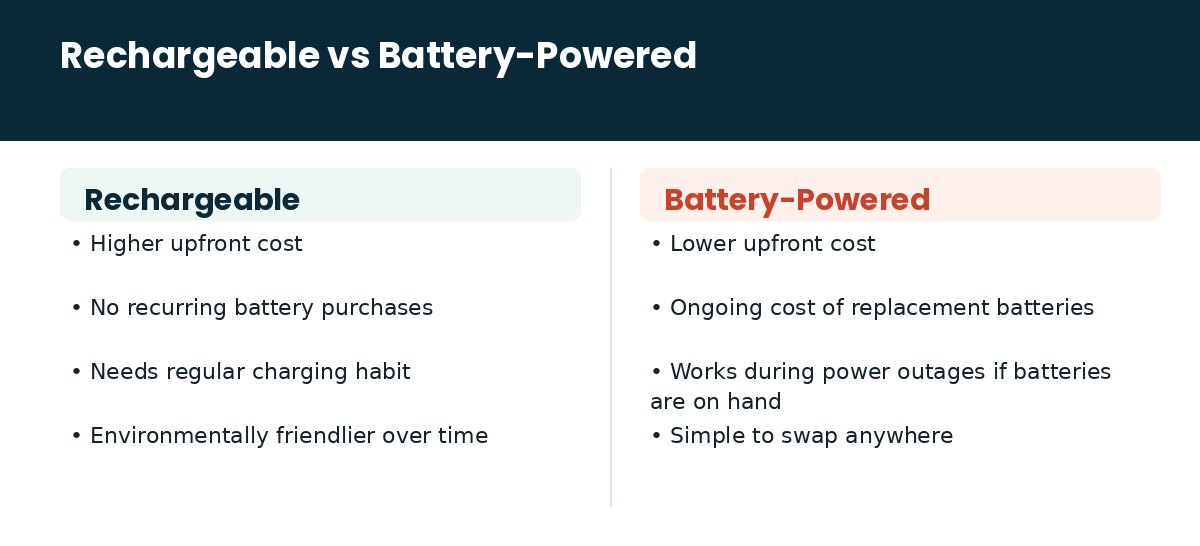
A rechargeable monitor typically costs more upfront, but it removes the recurring cost and hassle of buying replacement batteries, and tends to be a somewhat more environmentally friendly option over its lifespan since you are not regularly discarding used batteries. The trade-off is that it requires you to build a habit of charging it periodically, and if you forget, you could find it out of power exactly when you want to use it.
A battery-powered monitor has a lower upfront cost and is simple to keep running anywhere, as long as you have a spare set of batteries on hand. It also has a practical advantage during power outages, since you are not dependent on having recently charged the device, only on having batteries available. The downside is the ongoing cost and minor inconvenience of buying and replacing batteries over time.
When Rechargeable Actually Pays Off
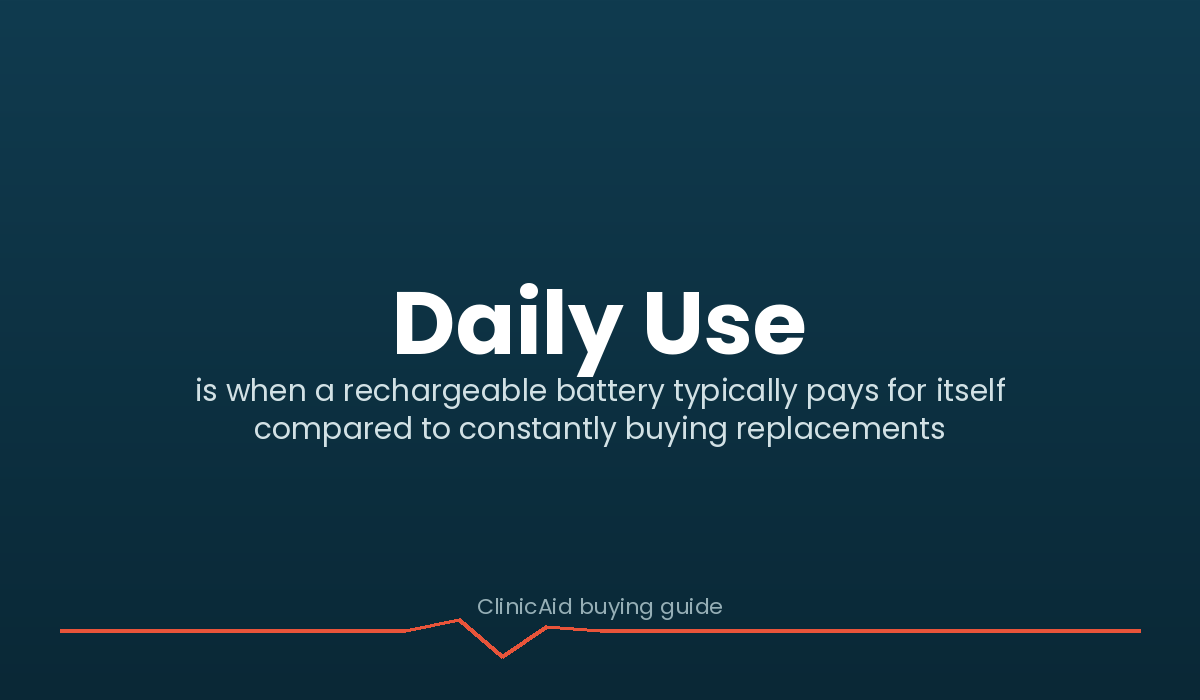
The value of a rechargeable battery scales with how often you use the device. If you are checking your blood pressure once or twice daily, which is a commonly recommended routine, the ongoing cost of standard batteries can add up meaningfully over a year, making the higher upfront cost of a rechargeable model a reasonable investment. If you only plan to check occasionally, perhaps once a week or less, a battery-powered model may never need a replacement battery for a long time, making the extra upfront cost of rechargeable harder to justify.
Signs Rechargeable Is Worth It For You
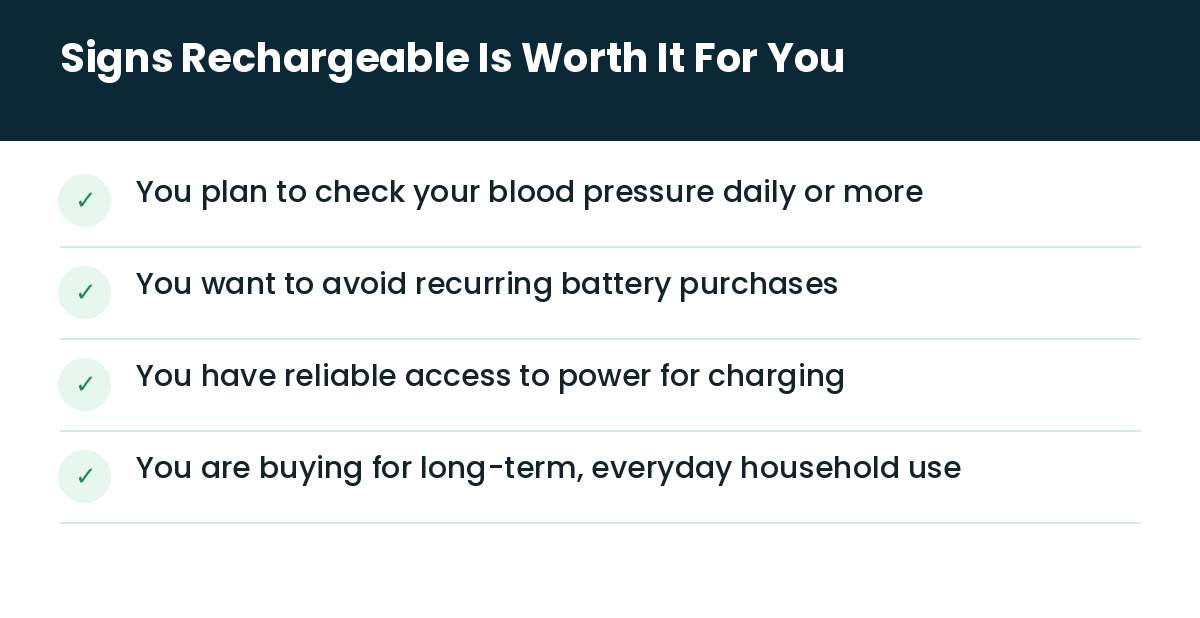
Rechargeable tends to make the most sense if you plan to check your blood pressure daily or more often, if you want to avoid the recurring cost and hassle of buying batteries, if you have reliable access to power for charging on a regular basis, and if you are buying the device for long-term, everyday household use rather than occasional or short-term monitoring.
The Power Supply Reality in Nigeria
This is worth addressing directly, since it is a genuinely practical concern for many Nigerian households. If your area experiences frequent power interruptions, a rechargeable device requires a bit more planning, charging it whenever power is available rather than assuming it will always be ready. Some households manage this easily by charging their monitor alongside other regularly charged devices, like a phone, as part of an existing routine. Others find a battery-powered device simpler to manage reliably, since batteries can be bought in advance and kept as a backup regardless of the power situation on any given day.
Neither approach is inherently better, it depends on which one fits your household’s actual habits and infrastructure realistically, rather than which sounds more modern or convenient in theory.
Long-Term Cost Comparison
While exact costs vary by brand and usage pattern, it is worth thinking through the basic math for your own situation. A rechargeable device has a higher one-time cost but effectively no ongoing expense beyond electricity, which is minimal. A battery-powered device has a lower one-time cost but an ongoing expense that depends entirely on how often you use it and the cost of batteries where you shop. For light, occasional use, batteries may never add up to much. For daily, long-term use across a household with multiple users, the recurring cost can meaningfully close the gap with, or even exceed, the upfront premium of a rechargeable model.
Our Recommendation
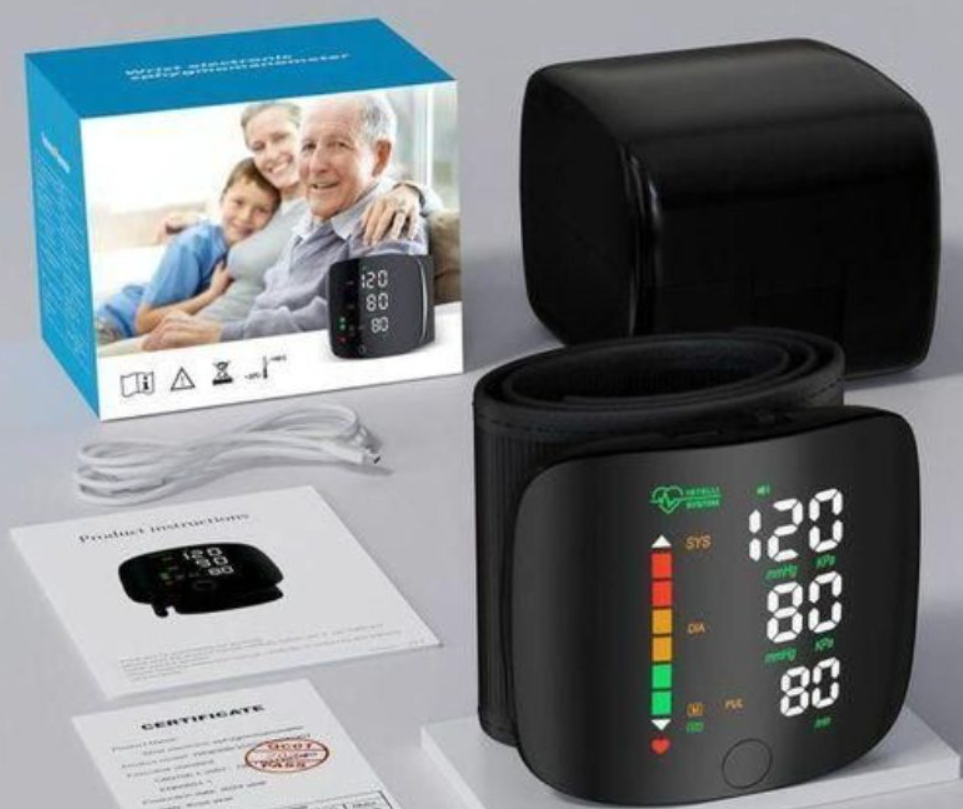
If you are buying a wrist monitor for regular daily use, especially across a household with more than one person checking their blood pressure, a rechargeable model is generally the more sensible long-term investment. If you expect to use it only occasionally, or if your power supply makes reliable charging difficult, a standard battery-powered monitor remains a completely reasonable, dependable choice. Our Digital Wrist Blood Pressure Monitor and Portable Digital Wrist Blood Pressure Monitor both offer dependable power options, and our team can help you decide which fits your household best before you order.
A Note on Battery Availability in Nigeria
Standard batteries for blood pressure monitors are widely available across Nigerian pharmacies, supermarkets, and convenience stores, which makes the battery-powered route genuinely practical rather than a hassle waiting to happen. This is worth mentioning because in some countries, sourcing the exact battery type needed can be inconvenient, but that is generally not a real barrier here. This makes the decision between rechargeable and battery-powered more genuinely about personal preference and usage frequency than about which option is realistically achievable where you live.
A Simple Way to Decide for Your Household
If you are still unsure which option fits your household, try answering three quick questions honestly. How often will this device realistically be used, daily, weekly, or only occasionally? How reliable is your access to power for regular charging? And how much do you personally value avoiding the small, recurring task of buying and swapping batteries over time? Your answers will usually point clearly toward one option or the other, and either choice, made thoughtfully, will serve you well.
Frequently Asked Questions
How long does a rechargeable battery typically last before it degrades? Most rechargeable batteries in health devices hold up well for a few years of regular use before you might notice a meaningful drop in how long a single charge lasts, similar to a phone battery’s typical lifespan.
Can I use a rechargeable monitor while it is charging? This depends on the specific model, so check the instructions that come with your device. Many users simply charge their monitor overnight, similar to a phone, so it is always ready in the morning.
Is it safe to leave a rechargeable monitor plugged in constantly? Most modern rechargeable devices are designed to stop drawing power once fully charged, but it is still good practice to unplug it once charged rather than leaving it connected indefinitely, purely as a general precaution.
Do battery-powered monitors need a specific type of battery? This varies by model, so check your device’s specifications. Standard, widely available battery sizes are common, making replacements easy to find at most Nigerian shops and supermarkets.
Which option do you personally recommend for a first-time buyer? For most first-time buyers unsure of their exact usage pattern, a battery-powered model is a lower-risk starting point, letting you build the habit first before deciding whether the added convenience of rechargeable is worth upgrading to later.
Is there a risk of overcharging damaging the device long term? Modern rechargeable health devices generally include built-in protection against overcharging, but as a simple habit, unplugging once fully charged rather than leaving it connected for days at a time is a reasonable precaution that can help preserve battery health over the years.
Does the type of battery affect how accurate the readings are? No, battery type, whether rechargeable or standard, has no effect on measurement accuracy itself. Accuracy depends on the device’s internal sensor and how correctly you use it, not on how it is powered.
For more buying guidance like this, visit the ClinicAid blog.

Digi Clinicaid Nigeria Ltd is an online medical marketplace in Nigeria.