If you have ever measured your blood pressure on both a wrist monitor and an arm monitor within a few minutes of each other, you may have noticed the numbers did not match exactly. This confuses a lot of people, and it is a fair thing to want explained rather than just accepted. The difference is real, it has a physiological explanation, and understanding it will help you trust whichever device you choose to use.
Why the Numbers Are Not Always Identical
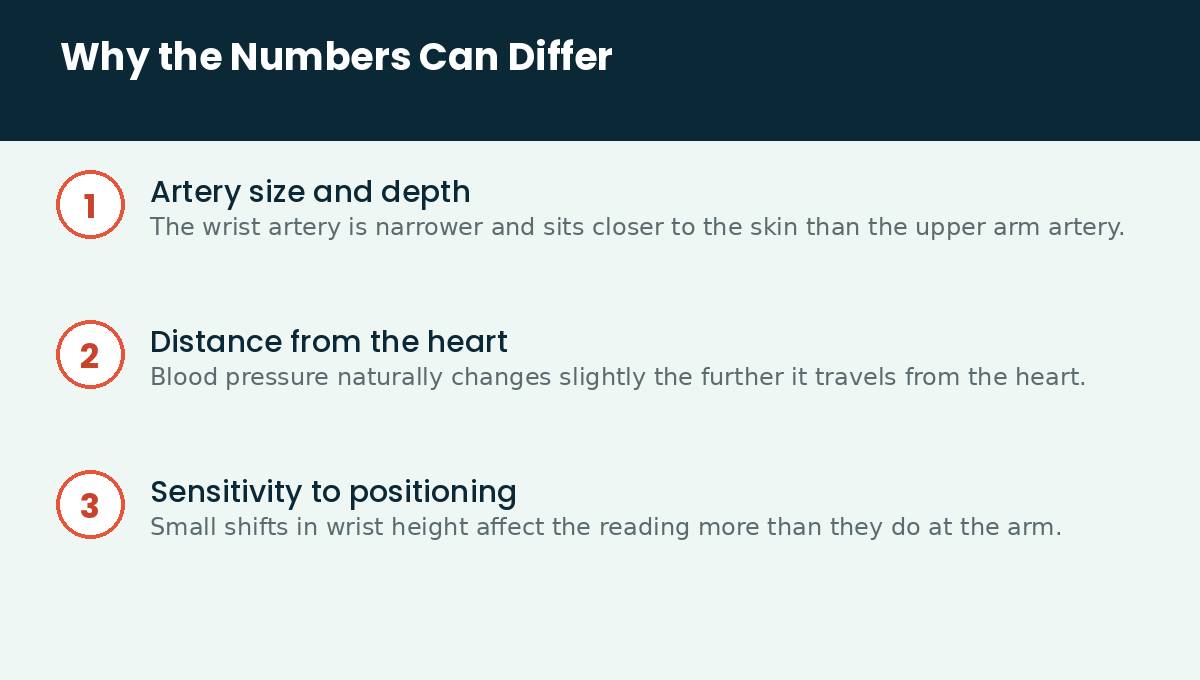
Blood pressure is not a single fixed number that stays the same everywhere in your body at a given moment. It naturally varies slightly depending on where in your circulatory system you measure it, and how far that point is from your heart. The artery in your wrist, called the radial artery, is narrower and sits closer to the surface of your skin than the brachial artery in your upper arm, which is what an arm monitor measures. This difference in artery size and depth is part of why wrist readings can behave slightly differently from arm readings, even when both devices are working correctly.
The other major factor is positioning sensitivity. Because the wrist artery is smaller and closer to the surface, small changes in how you hold your wrist during measurement have a bigger effect on your reading than the same small changes would have on an arm reading. This is really the heart of the issue: it is not that wrist monitors are less capable, it is that they are more responsive to technique.
The Factors Behind the Difference
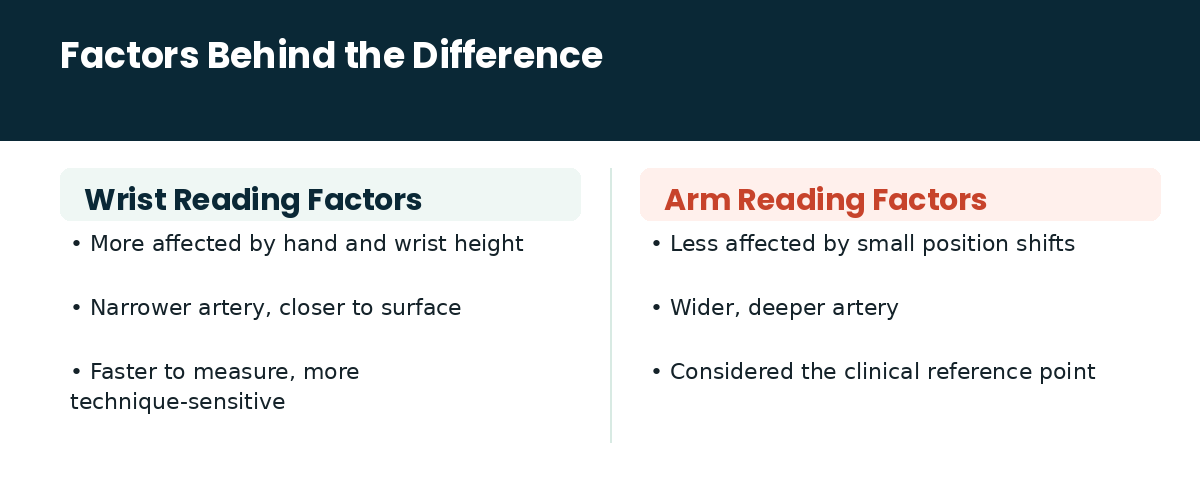
Wrist readings are more affected by the exact height at which you hold your hand and wrist, since the narrower, more superficial artery responds more noticeably to positioning relative to your heart. Arm readings, by contrast, tend to be less affected by small shifts in position, which is part of why clinical guidelines still often treat the upper arm measurement as the reference point (American Heart Association on home blood pressure monitoring).
None of this means a wrist reading is wrong. It means a wrist reading is a genuinely useful measurement of your blood pressure, provided you control for the one variable that matters most: keeping your wrist level with your heart during the reading.
Is One “More Correct” Than the Other?
This is a common but slightly misleading way to frame the question. Neither reading is inherently more correct, they are both accurately measuring blood pressure at different points in your body. What matters clinically is consistency and trend over time, not achieving an identical number between two different types of devices. Mayo Clinic notes that wrist monitors remain a legitimate option for people who use them correctly, even though upper arm monitors are generally still preferred as the default recommendation (Mayo Clinic on wrist blood pressure monitor accuracy).
How to Minimize the Gap Between Readings
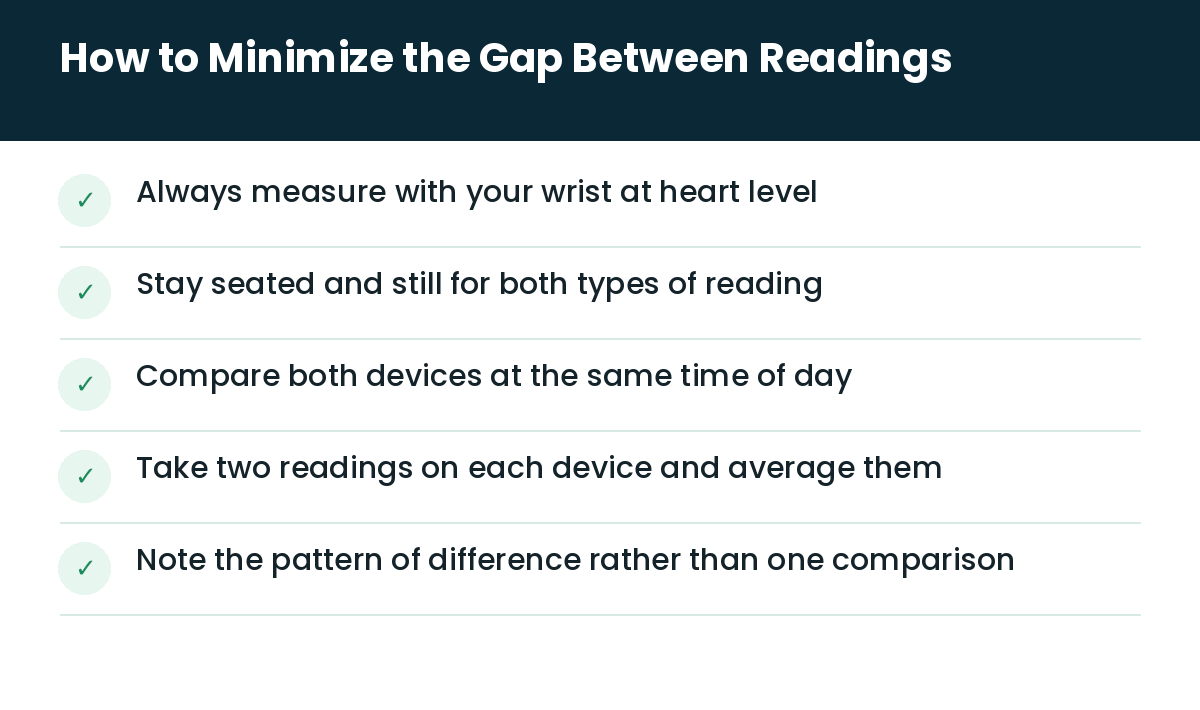
If you want your wrist and arm readings to align as closely as possible, a few habits make a real difference. Always measure with your wrist positioned exactly level with your heart, since this single factor accounts for most of the variation people notice. Stay seated and still for both types of reading, rather than comparing a relaxed arm reading against a rushed wrist reading. Try to compare both devices at roughly the same time of day, since blood pressure naturally shifts throughout the day regardless of which device you use. Take two readings on each device and use the average rather than comparing single numbers. And rather than obsessing over matching two individual readings exactly, pay attention to whether the pattern of difference stays consistent over time, which tells you more about how reliable your technique is than any single side-by-side comparison.
What This Means for Choosing Your Monitor
Understanding this difference should give you more confidence in a wrist monitor, not less. The gap between wrist and arm readings is a well understood, explainable phenomenon rooted in basic physiology, not a sign that one device is faulty or untrustworthy. As long as you use correct technique consistently, a wrist monitor gives you a genuinely reliable way to track your blood pressure trends over time.
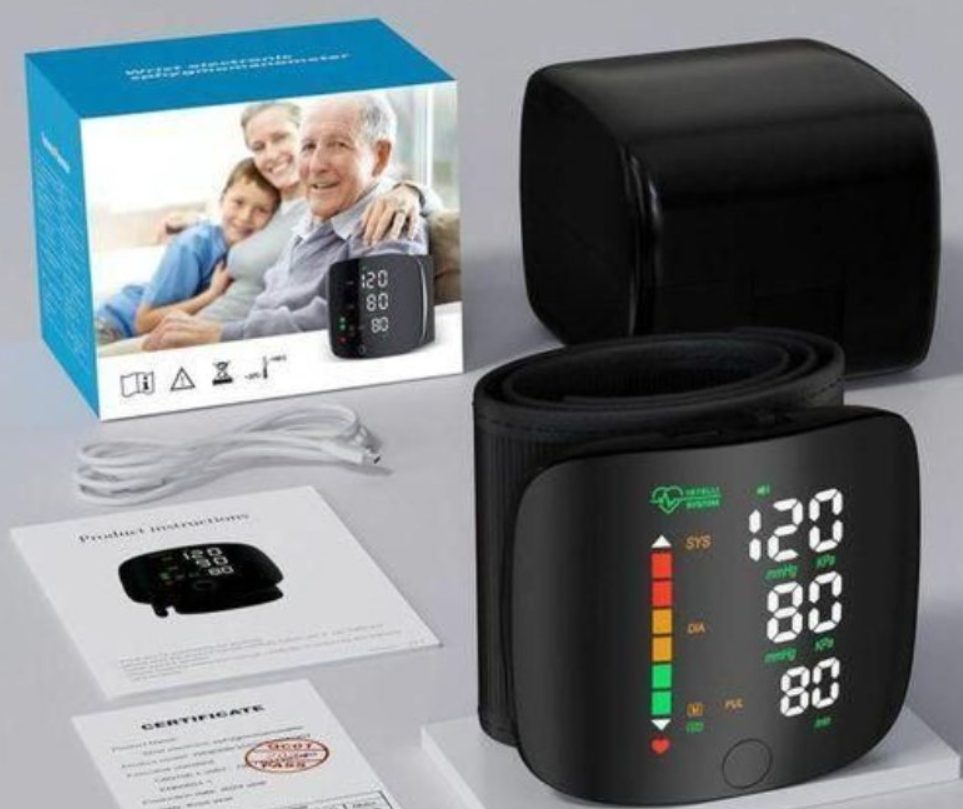
Our Digital Wrist Blood Pressure Monitor is designed with an adjustable cuff to minimize positioning-related variation, alongside a memory function so you can track your own consistent pattern over time rather than fixating on any single reading. For those who want the same reliability while traveling, our Portable Digital Wrist Blood Pressure Monitor is built for exactly this, and our standard Wrist BP Monitor covers everyday home tracking reliably.
A Simple Way to Build Confidence in Your Numbers
If the gap between your wrist and arm readings has ever made you second-guess your monitor, there is a straightforward way to build genuine confidence rather than just hoping for the best. Keep a simple log for two weeks, noting both your wrist readings and, if you have access to one, occasional arm readings taken at a clinic or with a second device. Look specifically at the pattern rather than any single comparison. If your wrist readings consistently run a similar amount higher or lower than your arm readings, that consistency itself is reassuring, it tells you your technique is stable and your device is behaving predictably, which is far more useful clinically than achieving an identical number on any given day.
This kind of pattern-based thinking is also how most doctors actually interpret home readings. They are rarely looking for an exact match to a clinical device, they are looking for trends that either stay stable, improve, or worsen over time, alongside the context of how the readings were taken.
Frequently Asked Questions
How big is the typical difference between wrist and arm readings? It varies by individual and by how carefully each reading was taken, so there is no single universal number. What matters more than the exact gap is whether that gap stays roughly consistent over repeated comparisons, which suggests your technique is stable, versus a gap that changes wildly, which usually points to a positioning issue on one of the readings.
Should I be worried if my wrist reading is always a bit higher than my arm reading? Not necessarily, as long as the difference is consistent and modest. A stable, predictable offset is far less concerning than an erratic one. If you are ever unsure, bring both devices to a clinic visit and compare each against a professional reading taken at the same time.
Can I just always add or subtract a fixed number to correct my wrist reading? This is not generally recommended, since the relationship between wrist and arm readings is not perfectly linear or identical for every person. It is better to track each device’s own trend over time rather than trying to mathematically convert one reading type into the other.
Does this difference matter for diagnosing high blood pressure? A doctor evaluating your blood pressure will typically want to know which device and method produced your readings, since they understand this natural variation. Bringing your home readings, along with notes on which device you used, to your appointment gives your doctor the full picture they need.
Is this difference unique to ClinicAid devices, or true of all wrist monitors? It is a general characteristic of wrist versus arm measurement technology as a whole, not something specific to one brand. Any well-made wrist monitor, used against any well-made arm monitor, will show this same basic pattern rooted in artery physiology, so it is not a quality issue with any particular device.
For more explainers like this one, visit the ClinicAid blog.

Digi Clinicaid Nigeria Ltd is an online medical marketplace in Nigeria.