If you are considering a wrist blood pressure monitor and want the full picture before you buy, rather than piecing it together from scattered sources, this guide brings everything together in one place. What it is, how accurate it really is, how to use it correctly, and how to choose the right one for your household.
What a Wrist Blood Pressure Monitor Actually Does
A wrist blood pressure monitor is a compact, automatic device that measures your systolic pressure, diastolic pressure, and pulse rate using a cuff worn around your wrist rather than your upper arm. It uses the same core technology as a digital arm monitor, an inflatable cuff paired with a digital sensor, just scaled down and repositioned for convenience.
Is It Actually Accurate?
This is the question most people ask first, and the honest answer is yes, when used correctly. Wrist monitors are more sensitive to positioning than arm monitors, since the wrist artery is narrower and closer to the skin’s surface. The single most important factor in getting an accurate wrist reading is keeping your wrist level with your heart during measurement (Mayo Clinic on wrist monitor accuracy). Get that right consistently, along with sitting still and resting beforehand, and a good wrist monitor gives you genuinely reliable data.
Understanding Your Numbers
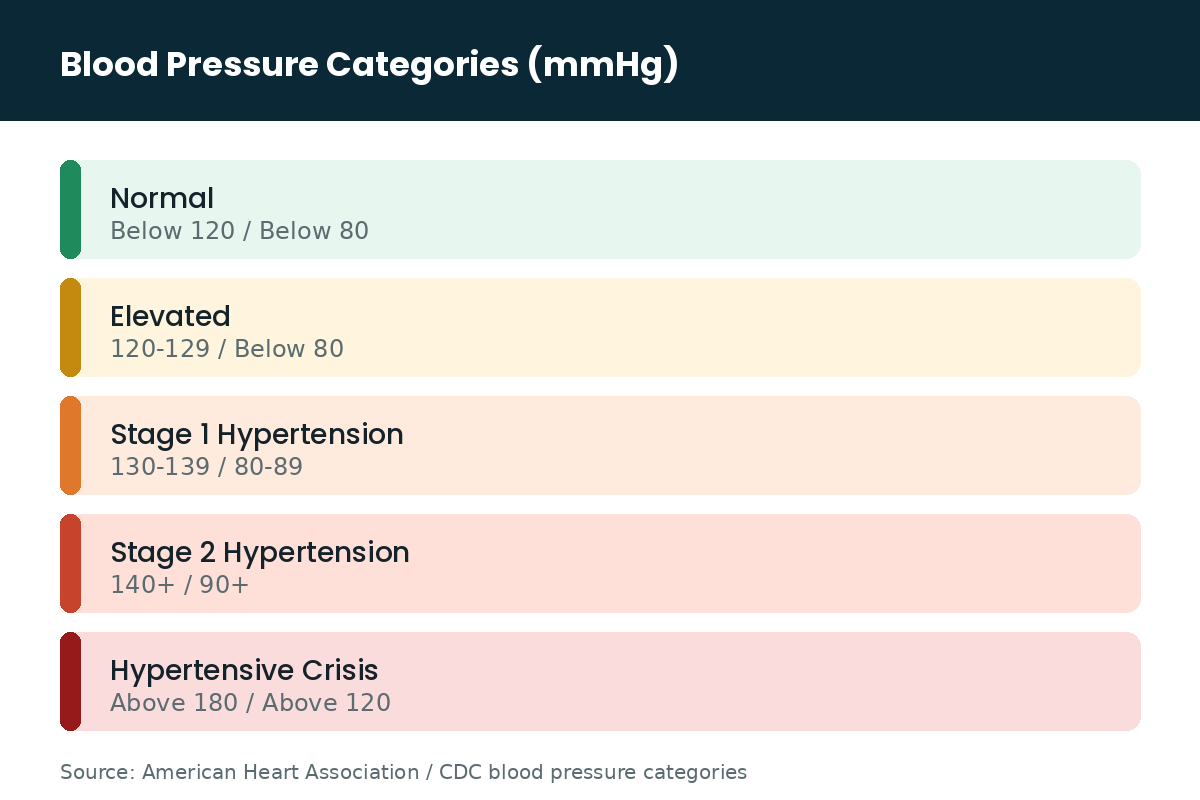
Once you start measuring, you need to know what your numbers actually mean. A reading below 120/80 mmHg is generally considered normal. Numbers between 120 to 129 systolic, with diastolic still under 80, are considered elevated. Stage 1 hypertension covers 130 to 139 systolic or 80 to 89 diastolic, while Stage 2 covers 140 or higher systolic or 90 or higher diastolic. Anything above 180/120 mmHg is a medical emergency requiring immediate attention (CDC on blood pressure categories).
How to Use One Correctly
Using a wrist monitor properly takes less than two minutes once it becomes a habit. Sit quietly for about five minutes before measuring, avoiding caffeine, food, or exercise beforehand. Wrap the cuff snugly around your bare wrist, positioned just above the wrist bone. Rest your wrist against your chest so it sits level with your heart. Stay still and quiet while the cuff inflates and takes its reading. Then record your numbers, and take a second reading about a minute later to confirm consistency.
Wrist vs Arm at a Glance
Wrist monitors are compact and affordable, quick to use daily, and require careful heart-level positioning to stay accurate. Arm monitors remain the clinical reference standard, are somewhat more forgiving of small position errors, but are bulkier to store and take slightly longer to set up. Neither is universally “better,” they simply suit different priorities, convenience and cost versus maximum forgiveness of technique errors.
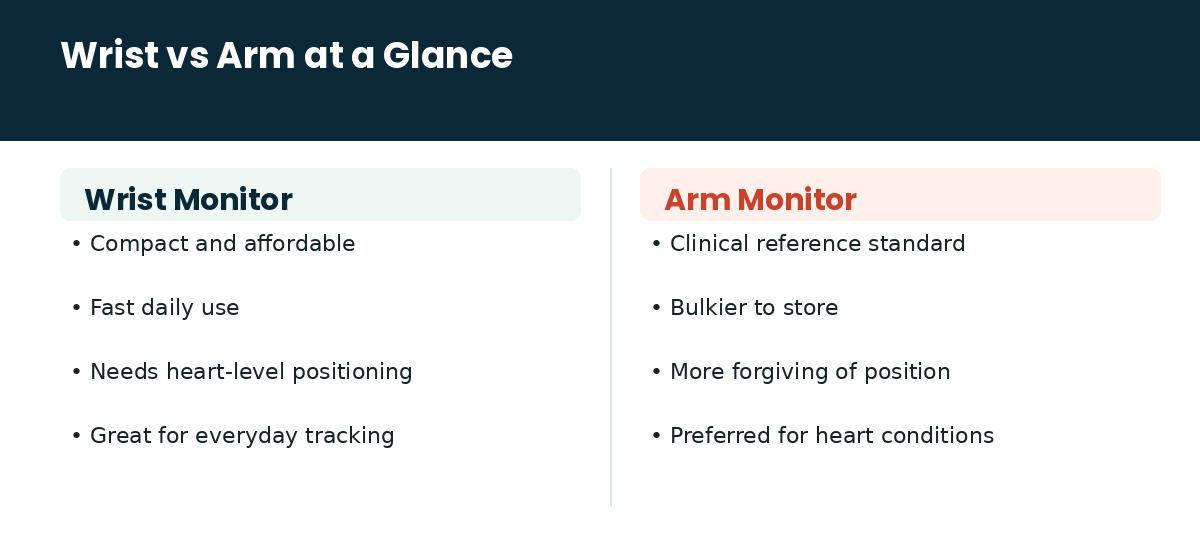
For most healthy adults monitoring at home for general awareness, a validated wrist monitor is a completely reasonable choice. For people managing a diagnosed heart condition under a doctor’s specific instruction, an arm monitor may be preferred.
Your Buying Checklist
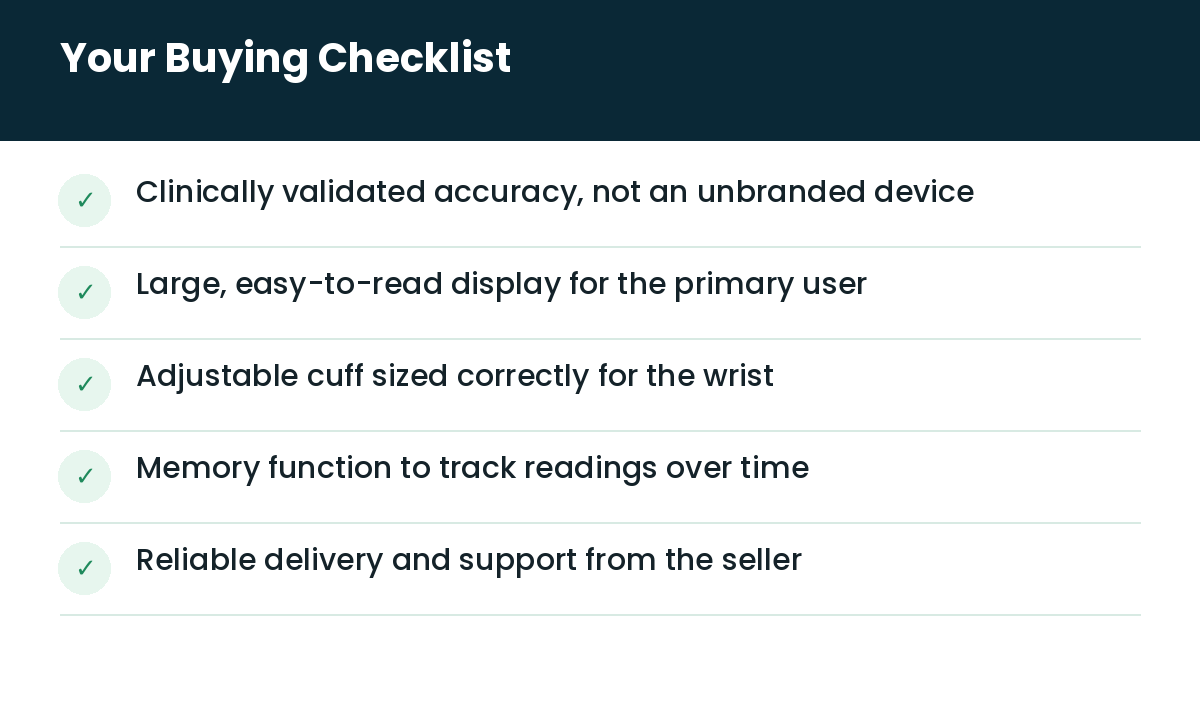
Before you purchase, confirm the device offers clinically validated accuracy rather than being an unbranded, untested product. Check for a large, easy-to-read display, particularly important if an older family member will be the primary user. Make sure the cuff is adjustable and properly sized for the intended wearer’s wrist. Look for a memory function so you can track trends over time rather than isolated numbers. And buy from a seller who offers reliable delivery and genuine support after your purchase, not just a one-time transaction.
Common Mistakes to Avoid
The most frequent mistakes with wrist monitors all come down to technique rather than the device itself: letting your wrist hang below heart level, measuring immediately after activity, talking or moving during the reading, wearing the cuff over a sleeve, and treating a single reading as the final word rather than averaging two or three. Every one of these is easy to fix once you know to watch for it.
What a Normal Household Routine Looks Like
A simple, sustainable approach is checking twice daily, once in the morning before breakfast and once in the evening before dinner, using the same wrist each time and noting your numbers consistently. This gives you and your doctor genuinely useful data over weeks and months, rather than a single number captured during an occasional clinic visit.
Where to Buy
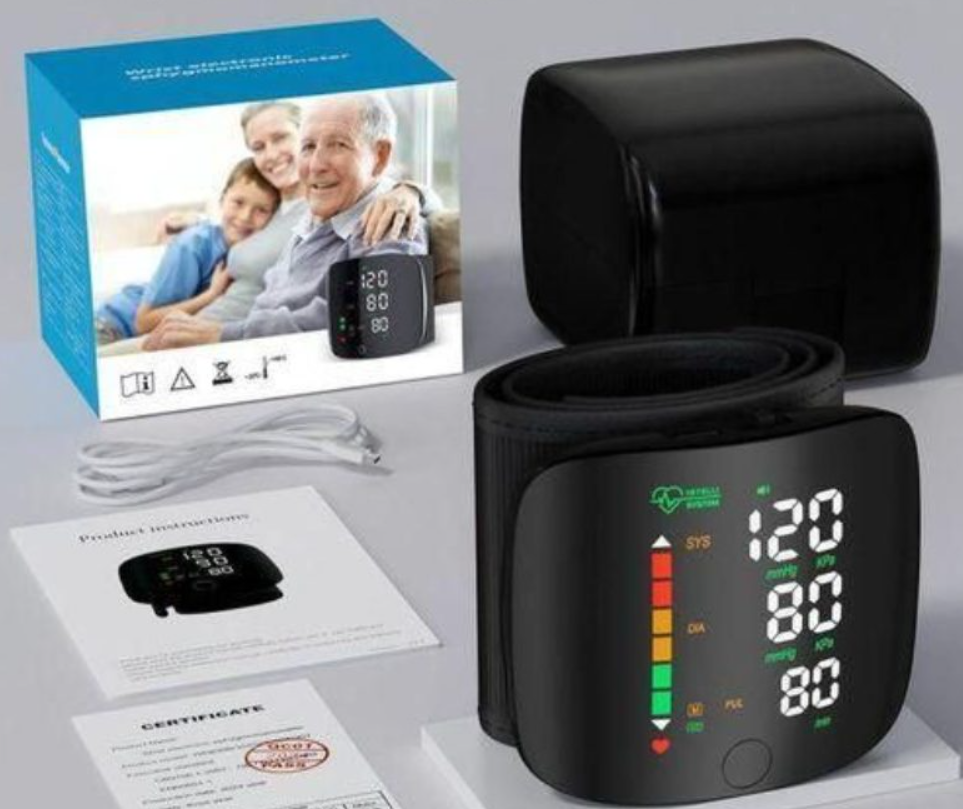
ClinicAid offers a few wrist monitor options depending on your needs. Our Digital Wrist Blood Pressure Monitor is our most popular all-around choice for home use. If portability matters most, our Portable Digital Wrist Blood Pressure Monitor is built to travel well without sacrificing accuracy. And our standard Wrist BP Monitor offers dependable everyday tracking at a lower price point. All ship nationwide, with orders placed before 3pm typically dispatched the same day.
When to See a Doctor About Your Readings
Owning a monitor is not the same as replacing professional care, and it helps to know clearly when a reading warrants a conversation with a doctor rather than continued home tracking alone. Consistently seeing numbers at or above 130/80 mmHg across several days is worth raising with a healthcare professional. A sudden, unexplained spike from your normal pattern deserves attention as well. Any single reading above 180/120 mmHg is a medical emergency requiring immediate care, particularly if paired with symptoms such as chest pain, shortness of breath, or vision changes. And if you ever feel genuinely unwell alongside a high reading, do not simply wait and monitor at home, seek help promptly.
Bringing It All Together
A wrist blood pressure monitor is a small device that solves a genuinely large problem, the fact that so much of high blood pressure goes undetected simply because checking it has historically been inconvenient. Get the fundamentals right: choose a validated device, learn the correct technique, understand your numbers, and build a consistent daily habit, and you will have a reliable, practical tool for staying ahead of one of the most common and most manageable health risks that Nigerian households face today.
Frequently Asked Questions
Do I need a doctor’s approval before buying a wrist monitor? No, wrist blood pressure monitors are available over the counter and can be purchased and used without a prescription. If you have an existing diagnosis, it is still worth discussing your monitoring routine with your doctor.
How much should I expect to pay for a reliable wrist monitor in Nigeria? A validated digital wrist monitor typically costs around twenty thousand naira, a reasonable investment for a device you will likely use for years.
Can I trust a wrist monitor more than my own judgment about how I feel? Yes, this is actually one of the strongest arguments for owning one. High blood pressure often has no noticeable symptoms at all, which is exactly why regular measurement matters more than relying on how you feel in the moment.
What is the single most important habit for getting reliable readings? Keeping your wrist level with your heart during every single measurement. This one habit resolves the majority of accuracy complaints people have with wrist monitors.
Should I buy a wrist monitor or an arm monitor if I can only afford one? For most people monitoring for general health awareness rather than a specific diagnosed condition, a wrist monitor offers the better balance of cost and convenience, provided you commit to using correct technique consistently.
For more detailed guides on every aspect of home blood pressure monitoring, explore the rest of the ClinicAid blog.

Digi Clinicaid Nigeria Ltd is an online medical marketplace in Nigeria.