Walk into any pharmacy in Nigeria looking for a blood pressure device and you will likely be shown two or three very different-looking products, an old-style dial gauge with a stethoscope, a bulky arm cuff with a digital screen, or a small wrist unit that looks almost like a fitness tracker. They all claim to do the same job, but they work differently, and choosing the wrong one for your situation can mean less accurate readings or a device you eventually stop using altogether. Here is what each type actually is, and how to decide which one fits you.
What Counts as a Blood Pressure Device?
A blood pressure device, sometimes called a sphygmomanometer in medical terms, is any tool used to measure the pressure of blood moving through your arteries. Every version, from the oldest manual gauge to the newest digital monitor, measures the same two numbers: systolic pressure (the force when your heart beats) and diastolic pressure (the force when your heart rests between beats).
What differs between devices is how that measurement is taken, and how much skill or training it requires to get an accurate result.
The 3 Common Types
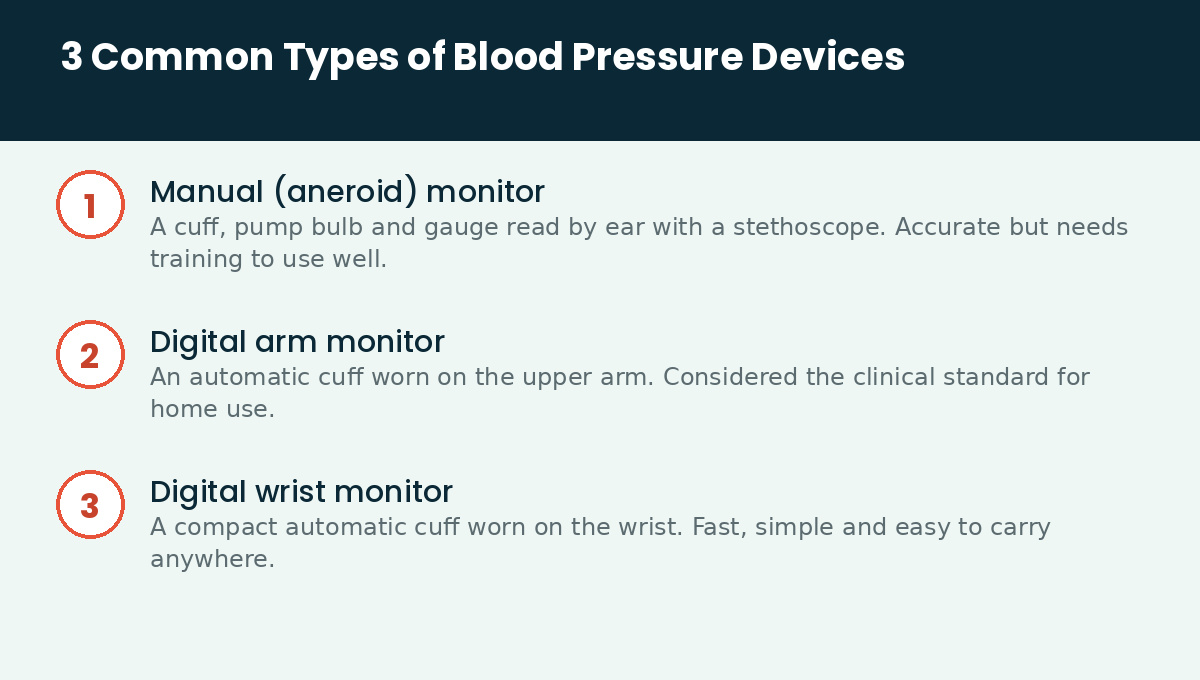
Manual, or aneroid, monitors use a cuff connected to a hand-pump bulb and a dial gauge. The person taking the reading listens through a stethoscope for specific pulse sounds while releasing air from the cuff. These are accurate in trained hands, which is exactly the problem, they require real practice to use correctly, making them a poor fit for most home users.
Digital arm monitors automate the entire process. You wrap the cuff around your upper arm, press a button, and the device inflates, measures, and displays your reading on its own. This is the type most hospitals and clinics recommend for home use, largely because it removes the guesswork of manual listening.
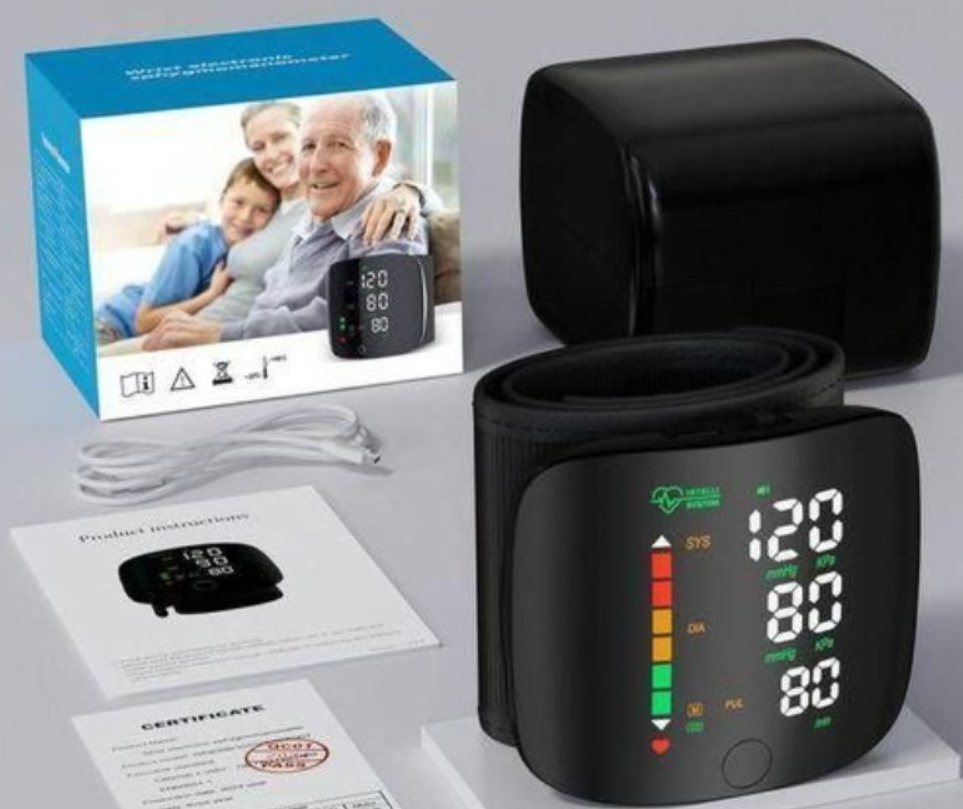
Digital wrist monitors work on the same automatic principle as arm monitors, but with a smaller cuff worn around the wrist instead. They are more compact, quicker to put on, and often more affordable, which is why they have become popular for everyday home tracking, particularly for people who want something fast and simple.
Digital vs Manual: The Real Difference
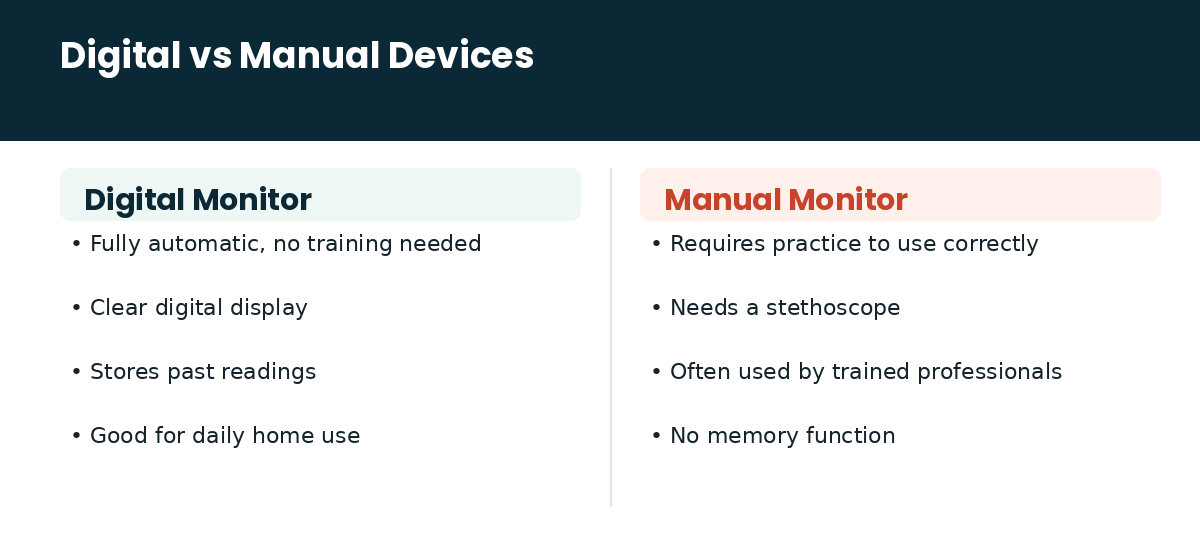
For almost every home user, a digital device, whether arm or wrist, is the more practical choice. Manual devices remain valuable in clinical settings where a trained professional is taking the reading, but they are simply not designed for casual home use. If you are choosing your first blood pressure device, this decision is usually already made for you: go digital.
Wrist or Arm: The Second Decision
Once you have settled on a digital device, the next question is whether to get a wrist or an arm monitor. Clinical guidelines still tend to favor upper arm monitors as the reference standard, since they are slightly less sensitive to small errors in how you hold your arm (American Heart Association on home blood pressure monitoring). That said, a wrist monitor used correctly, positioned at heart level and used consistently, remains a genuinely useful option, especially for people who travel, prefer a smaller device, or simply find an arm cuff uncomfortable.
Mayo Clinic notes that wrist monitors can be an appropriate choice for people who cannot comfortably use an arm cuff, including those with larger arms or certain medical conditions that make an upper arm measurement impractical (Mayo Clinic on wrist monitor accuracy).
Questions to Ask Before You Buy
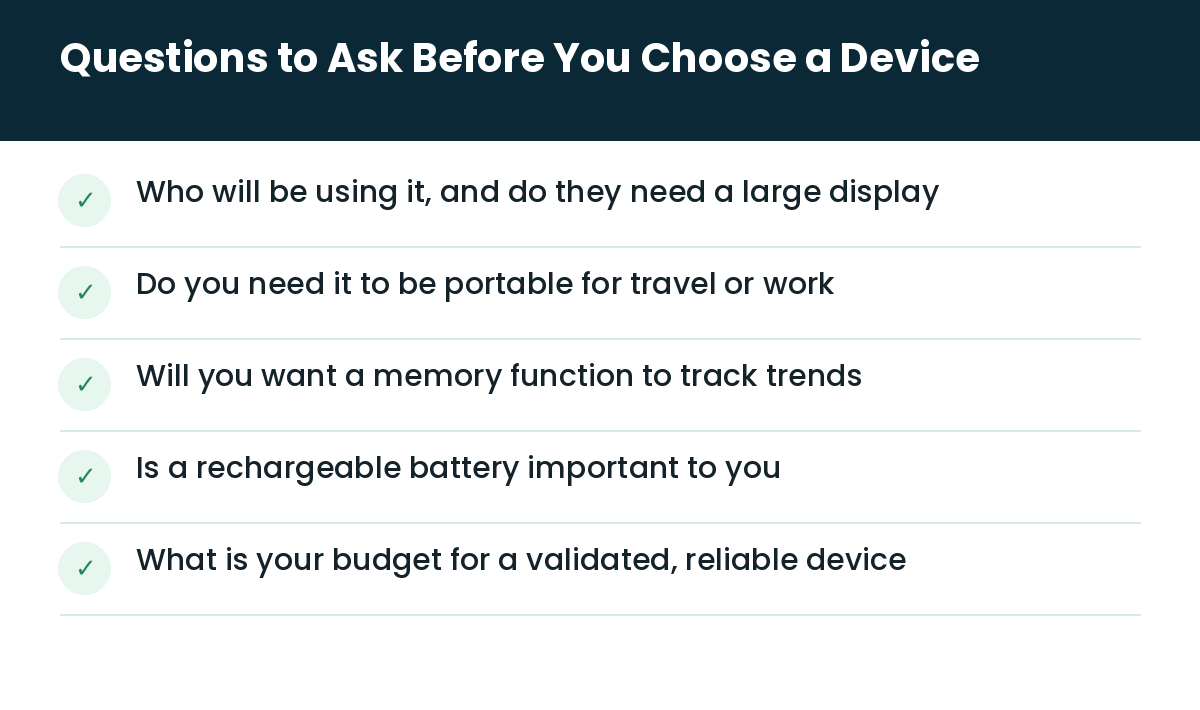
Before you settle on a specific device, it helps to think through how you will actually use it day to day. Who is the primary user, and would they benefit from a larger display? Do you need something portable enough to carry to work or on trips? Would a memory function that stores your history matter to you or your doctor? Is a rechargeable battery worth the extra cost over a standard battery-powered device? And finally, what is a realistic budget for something that is genuinely validated and reliable, rather than the cheapest option on the shelf?
Our Recommendation for Most Nigerian Households
For the vast majority of people monitoring blood pressure at home, whether for themselves or for an older relative, a validated digital wrist monitor offers the best mix of accuracy, convenience, and price. Our Digital Wrist Blood Pressure Monitor is built for exactly this use case, one-touch automatic readings, a large display, and a memory function so you can track your numbers over weeks or months, not just a single day.
If portability matters most to you, take a look at our Portable Digital Wrist Blood Pressure Monitor, built to travel in a bag or car without losing accuracy. For a simpler everyday option, our Wrist BP Monitor covers the basics reliably.
Final Thoughts
There is no single “best” blood pressure device for everyone, only the one that fits how you will actually use it. For most home users in Nigeria, that means skipping manual devices entirely and choosing between a digital arm or wrist monitor based on convenience, comfort, and how often you plan to check your numbers. Whichever you choose, what matters most is that you actually use it consistently, since a device sitting unused in a drawer helps no one.
For more guidance on choosing and using a home blood pressure monitor, explore the ClinicAid blog.
Avoiding the Temptation of the Cheapest Option
It can be tempting to choose whichever device is cheapest, particularly when browsing online marketplaces with unfamiliar brands. Resist this instinct when it comes to a health device. An unvalidated, unbranded monitor may save you a small amount upfront but can cost you far more if it gives you consistently misleading readings, either causing unnecessary worry or, worse, providing false reassurance when your blood pressure genuinely needs attention. A modestly priced, validated device from a known source is almost always the better investment.
Frequently Asked Questions
Are manual blood pressure devices more accurate than digital ones? Not inherently. In the hands of a well-trained professional, a manual device can be extremely accurate. In the hands of an untrained user, it is often less reliable than a digital device, simply because it requires real skill to use correctly. For home use, digital devices remove this skill requirement entirely.
Do digital wrist monitors need to be calibrated? Most modern digital monitors, wrist or arm, do not require manual calibration by the user. However, it is good practice to compare your device against a clinical reading occasionally to confirm it is still performing accurately over time.
Can I use the same blood pressure device for multiple people in my household? Yes, a digital wrist or arm monitor can be shared among family members, as long as the cuff size fits each user appropriately. Many households use one device for several people, particularly parents monitoring both themselves and an older relative.
What is the typical lifespan of a digital blood pressure device? With normal home use, most quality digital monitors last several years before accuracy may begin to drift, at which point it is worth replacing or having the device checked. Proper storage, avoiding extreme heat or moisture, helps extend its lifespan.
Is it worth buying a smart or app-connected blood pressure device? For some users, especially those who want to share data easily with a doctor or family member, an app-connected device can be genuinely useful. For most people, though, a reliable standalone device with a built-in memory function covers the same core need without the added cost or complexity.

Digi Clinicaid Nigeria Ltd is an online medical marketplace in Nigeria.