Most inaccurate wrist blood pressure readings are not caused by a faulty device, they are caused by a handful of small, easy-to-fix habits that most first-time users do not even realize are affecting their numbers. If you have ever gotten a reading that seemed surprisingly high or oddly inconsistent, one of these five mistakes is probably the reason, not a problem with the monitor itself. Here is what to watch for, and how to fix each one so your numbers actually reflect your real blood pressure.
Mistake 1: Letting the Wrist Hang Below Heart Level
This is by far the most common mistake, and the one with the biggest impact on your reading. When your wrist sits lower than your heart, typically resting on your lap or by your side, gravity affects the pressure reading and your numbers can come out noticeably higher than your actual blood pressure.
The fix: rest your wrist against your chest, supported by your other arm, so it sits level with your heart during the entire measurement.
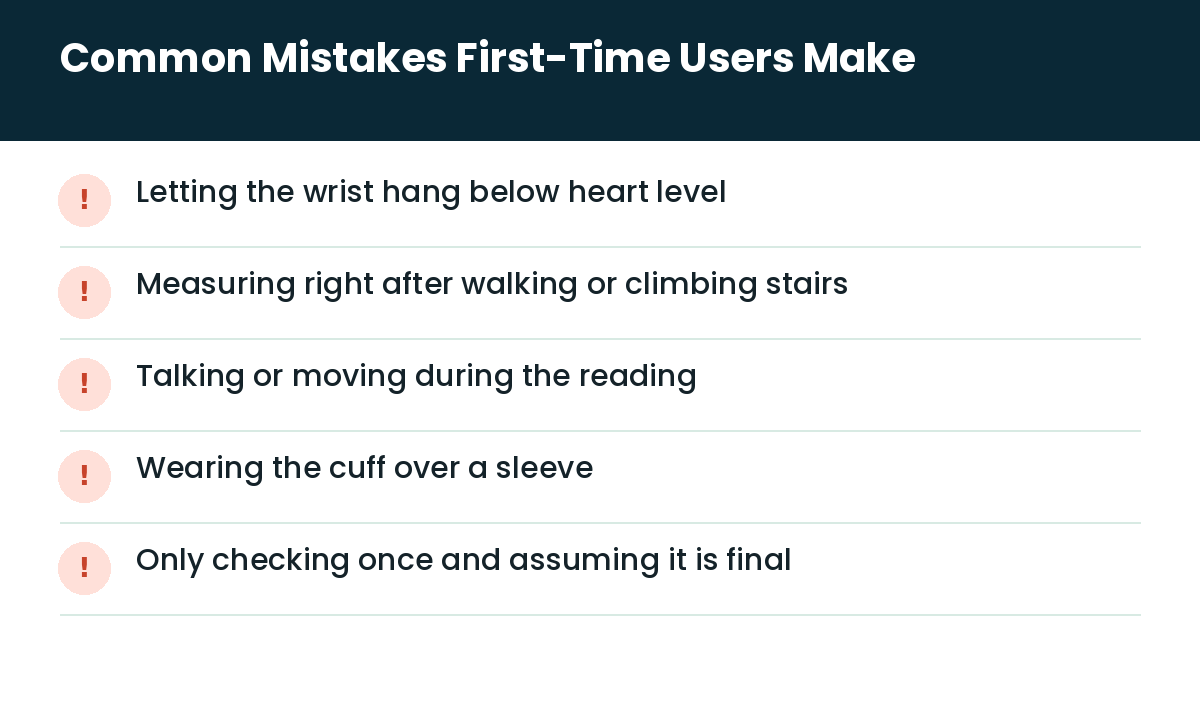
Mistake 2: Measuring Right After Activity
Walking to get the monitor, climbing stairs, or even a brisk conversation right before measuring can all temporarily raise your blood pressure. If you measure immediately afterward, you are not capturing your resting blood pressure, you are capturing your body mid-recovery from activity.
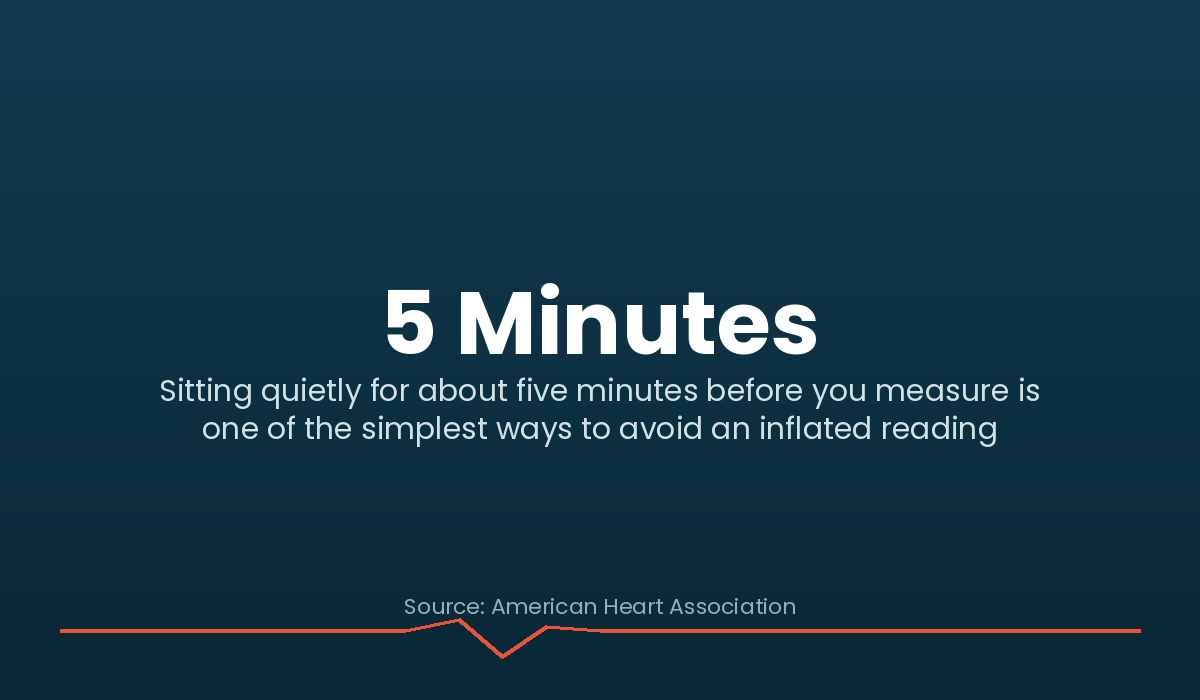
The fix: sit down and rest quietly for about five minutes before you take a reading. This single habit, recommended directly by the American Heart Association, is one of the simplest ways to get a number you can actually trust (AHA on accurate home blood pressure measurement).
Mistake 3: Talking or Moving During the Reading
It feels natural to chat with whoever is nearby while the cuff inflates, but talking, laughing, or even tensing your muscles during the measurement can shift your numbers. The same goes for crossing your legs or shifting in your seat.
The fix: stay quiet, stay still, and keep your feet flat on the floor for the full duration of the reading. It only takes about 30 to 45 seconds.
Mistake 4: Wearing the Cuff Over a Sleeve
A cuff placed over clothing, even something as thin as a shirt sleeve, cannot get an accurate read of the pressure in your artery. Bunched-up fabric under the cuff can also cause uneven pressure around your wrist.
The fix: always measure on a bare wrist. If you are wearing long sleeves, roll them up well above the cuff first.
Mistake 5: Only Checking Once and Assuming It’s Final
Blood pressure naturally fluctuates from one moment to the next, so a single reading, especially your very first one of the day, is not always representative. Treating one number as the final word can lead to unnecessary worry over a reading that was simply an outlier.
The fix: take two readings, about a minute apart, and use the average. If the two numbers are very different, take a third and average all three, a practice also recommended in clinical guidance on home blood pressure monitoring (AHA and AMA joint policy statement on self-measured blood pressure monitoring).
The Correct Routine at a Glance
Once you strip away the mistakes, the correct process is genuinely simple.
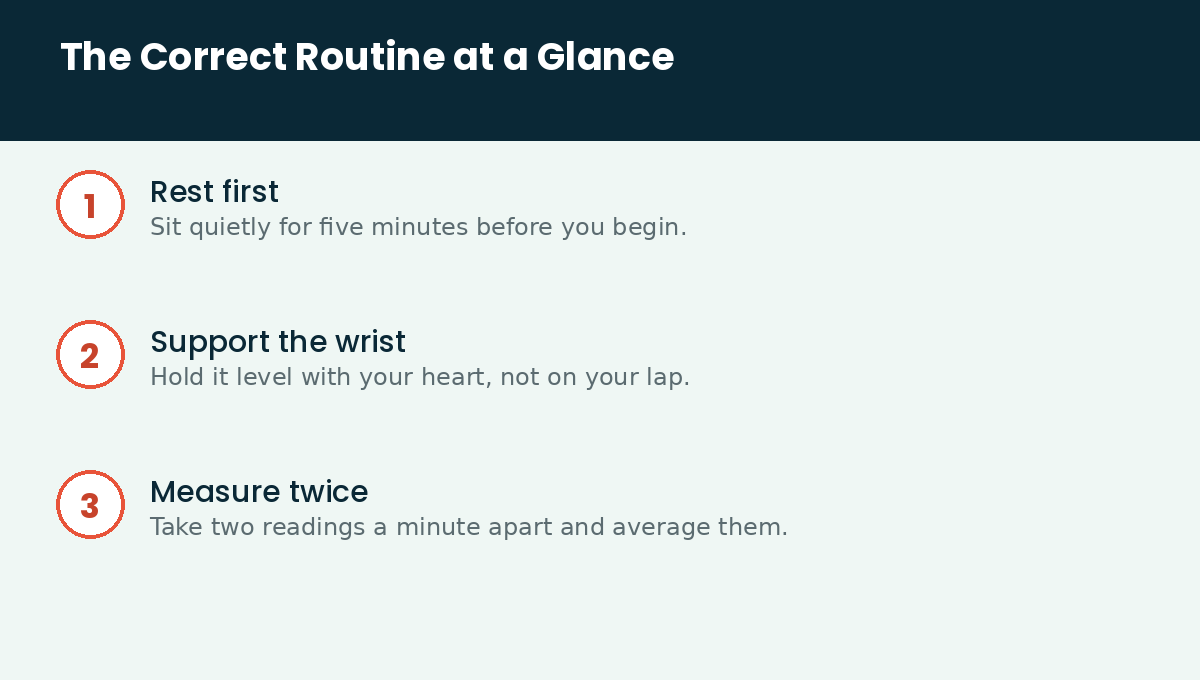
Rest for five minutes, support your wrist at heart level, and measure twice. That is really the whole routine, and getting these three things right consistently will eliminate the vast majority of measurement errors.
Why This Matters More Than It Seems
These might sound like minor details, but they add up to a real difference. A reading thrown off by poor positioning or a rushed measurement can show numbers 10 to 20 points higher than your actual blood pressure, which is more than enough to cause unnecessary alarm, or worse, to mask an improving trend that is actually working. Getting the technique right is what turns a wrist monitor from a rough guess into a genuinely useful health tool.
A Monitor That Makes This Easier
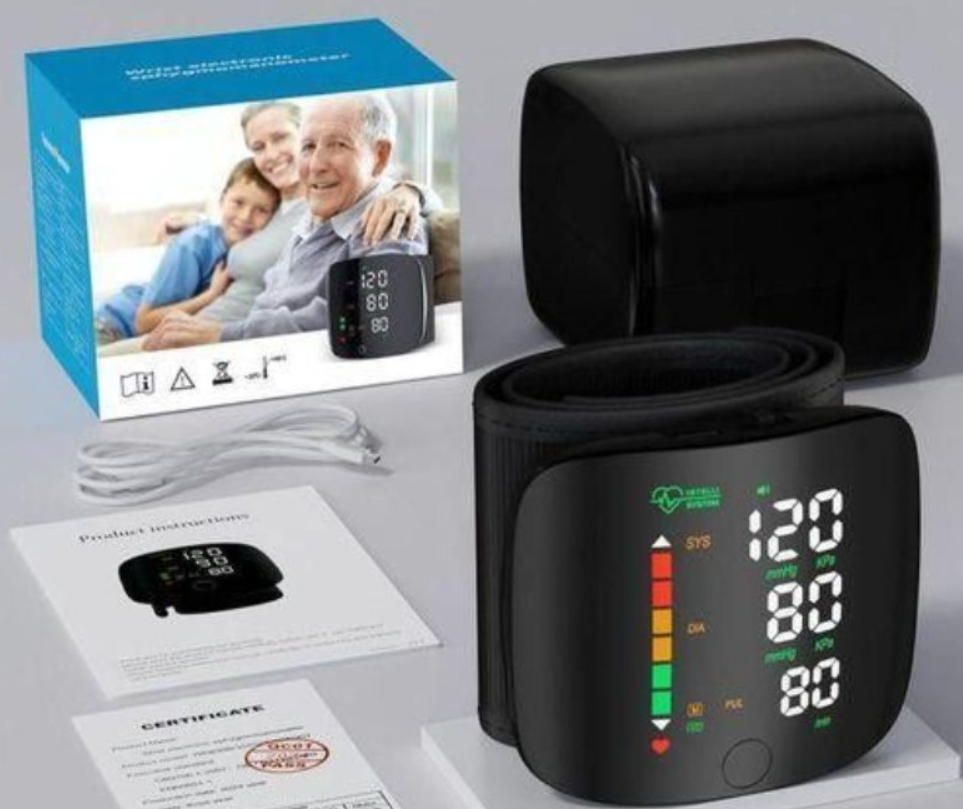
Part of avoiding these mistakes comes down to habit, and part of it comes down to using a monitor that is straightforward enough not to add confusion. Our Digital Wrist Blood Pressure Monitor is built for one-touch automatic readings with a clear, large display, so there is less room for user error once you have your technique right. If you are often on the move, our Portable Digital Wrist Blood Pressure Monitor is designed to travel with you without losing accuracy, and our standard Wrist BP Monitor is a solid everyday option for home use.
Final Thoughts
Every one of these five mistakes is easy to fix once you know to look for it. Rest before you measure, keep your wrist at heart level, stay still and quiet, measure on a bare wrist, and always take two readings instead of one. Small adjustments, but they are the difference between a number you can trust and one that leaves you second-guessing your own health.
For more tips on accurate home blood pressure monitoring, check out the rest of the ClinicAid blog.
A Quick Self-Check Before Every Reading
Before you press start, it helps to run through a quick mental checklist rather than relying on memory alone. Have you been sitting quietly for a few minutes? Is your wrist genuinely at heart level, not just resting on your lap? Are you about to stay still and quiet for the next minute? If you can answer yes to all three, you have already avoided the vast majority of the mistakes covered in this article, and your reading is far more likely to reflect your true blood pressure.
Frequently Asked Questions
I just started using a wrist monitor and my numbers seem high. Should I be worried? Not immediately. First, review the common mistakes in this article and make sure you are following correct technique, especially wrist positioning at heart level. Many first-time users see artificially high numbers simply because of how they are holding the device, not because of an actual health issue. If corrected readings remain consistently high over several days, that is worth discussing with a doctor.
Is it normal for my readings to vary from morning to evening? Yes, this is completely normal. Blood pressure naturally rises and falls throughout the day based on activity, stress, and even digestion. What matters is the overall pattern over time, not small variations between individual readings.
How long does it take to build the correct measuring habit? Most people get comfortable with the correct routine, resting first, positioning at heart level, staying still, within their first week of consistent use. After that, it becomes second nature and takes less than two minutes from start to finish.
Can another person help me take a more accurate reading? Yes, having someone help support your wrist at the correct height can actually improve accuracy, particularly for elderly users who may find it physically tiring to hold their own arm steady for the full measurement.
What if I keep making mistakes even after reading this guide? Do not be discouraged, this is a common experience for new users. Try writing the five steps from this article on a small card next to your monitor as a reminder until the routine becomes automatic. Most people naturally correct these habits within a couple of weeks of regular use.

Digi Clinicaid Nigeria Ltd is an online medical marketplace in Nigeria.