Home health monitoring has quietly become one of the most useful tools available to ordinary households, and a digital wrist blood pressure monitor sits right at the center of that shift. It takes something that used to require a clinic visit, trained staff, and specialized equipment, and puts it in the palm of your hand, ready to use any time you want. Here is why it has become such a smart, practical choice for home use specifically.
The Core Appeal: Removing Friction
The biggest barrier to consistent health monitoring has never really been a lack of willingness, it is friction. Clinic visits take time, cost money, and require planning ahead. A digital wrist monitor removes nearly all of that friction. You check your numbers in under a minute, in your own home, whenever it fits into your day, with zero appointment needed and zero training required to operate it correctly.
Why It’s a Smart Choice for Home Use
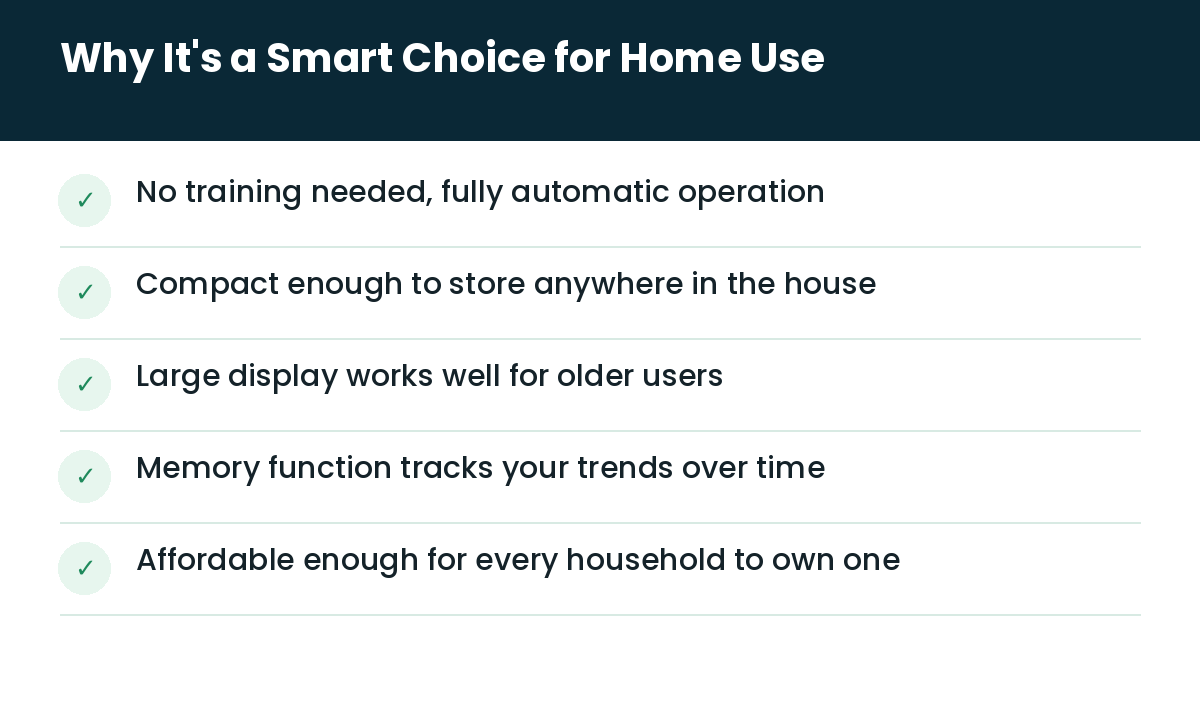
A digital wrist monitor requires no training at all, it is fully automatic from the moment you press start. It is compact enough to store anywhere in the house, a drawer, a bedside table, a bag, without taking up meaningful space. The large display works well even for older users who may struggle to read smaller text elsewhere. Its memory function tracks your trends over time automatically, so you are not relying on memory or a handwritten log. And it is affordable enough that most households can reasonably own one, rather than treating blood pressure monitoring as a luxury reserved for people already diagnosed with a condition.
How It Fits Into Your Daily Routine
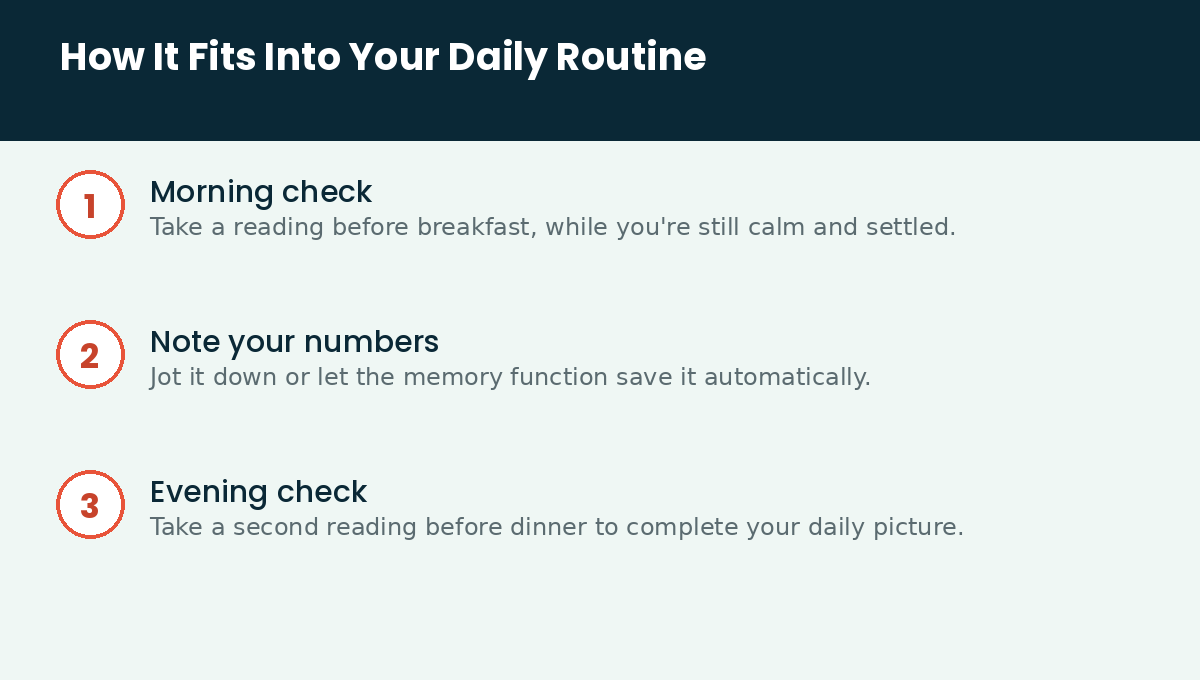
The real value of a home monitor comes from consistency, and a wrist monitor is genuinely easy to build into a daily routine. A simple, sustainable pattern looks like this: take a reading in the morning before breakfast, while you are still calm and settled from sleep. Note your numbers, either writing them down or letting the device’s memory function save them automatically. Then take a second reading in the evening before dinner, giving you a fuller picture of how your blood pressure moves across the day rather than a single snapshot.
This kind of twice-daily habit, recommended in various forms by major health bodies, gives you and your doctor something far more useful than an occasional reading taken only when you happen to remember or feel unwell (American Heart Association on home blood pressure monitoring).
Empowerment, Not Just Convenience
There is a psychological benefit to home monitoring that is easy to overlook. Knowing your own numbers, rather than waiting anxiously for a clinic visit to find out, gives you a genuine sense of agency over your own health. For people managing hypertension, this can mean catching a concerning trend early enough to adjust diet, activity, or medication before it becomes a more serious problem. For people without a diagnosis, it means peace of mind, or an early warning sign that prompts a doctor’s visit before symptoms ever appear.
The World Health Organization has highlighted how large a share of people with hypertension worldwide remain undiagnosed simply because they never had an easy way to check (WHO hypertension fact sheet). A device sitting in your home, ready whenever you want to use it, directly addresses that gap.
A Practical Fit for Nigerian Households
For many Nigerian families, clinic visits are not always simple to arrange around work, transportation, and cost. A digital wrist monitor sidesteps all of that. It also works particularly well for households looking after an older relative, letting them check their own numbers independently each day and share the results with family or a doctor, rather than depending entirely on someone else to arrange transportation to a clinic.
Choosing the Right One
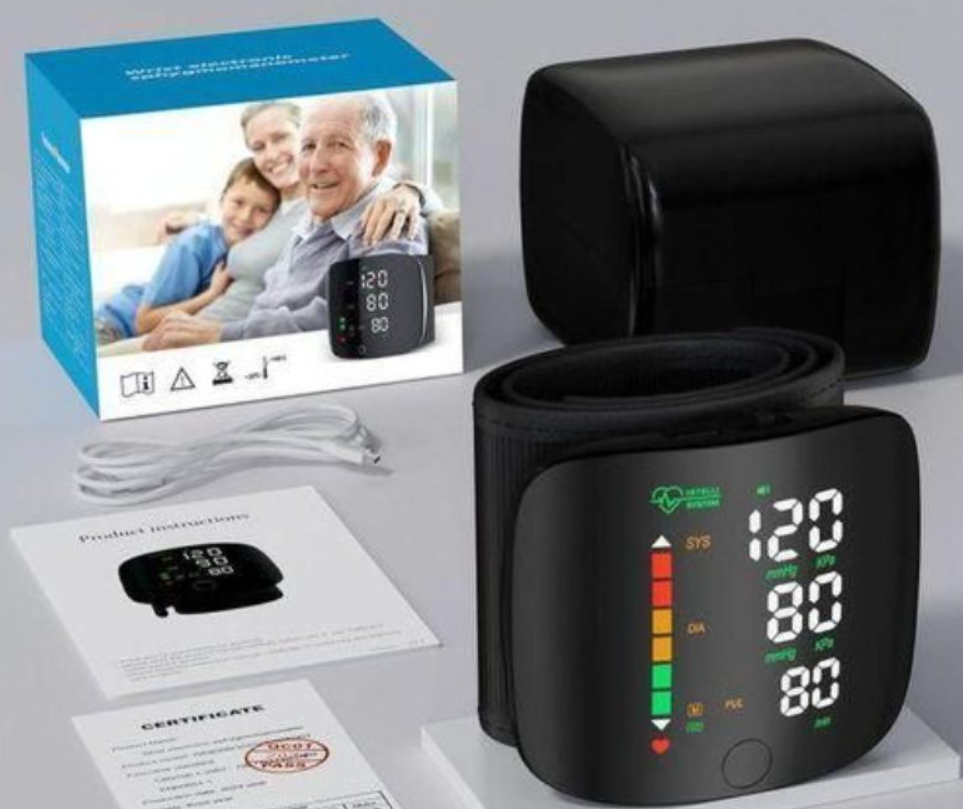
Our Digital Wrist Blood Pressure Monitor was built specifically around this idea of removing friction from home health monitoring, one-touch automatic readings, a large clear display, and a built-in memory function so your history is always there when you need it. If you want the same reliability while traveling, our Portable Digital Wrist Blood Pressure Monitor is built for exactly that, and our standard Wrist BP Monitor is a dependable everyday option for the whole household.
Why Convenience Actually Improves Health Outcomes
It might seem like convenience is a minor benefit compared to accuracy or clinical validation, but in practice, the easiest device to use is often the one that produces the most valuable long-term data. A highly accurate monitor that feels like a chore to use will get used inconsistently, or eventually not at all, while a convenient, simple device that fits naturally into daily life gets used every single day, building a far richer, more useful picture of your health over time. This is not a compromise on quality, it is a recognition that the best health tool is the one you will actually stick with. A digital wrist monitor is specifically designed around this principle, removing every possible source of friction so that daily monitoring becomes a habit rather than an occasional effort.
A Tool the Whole Family Can Use
Unlike many health devices that are built around a single user, a digital wrist monitor works well as a shared household resource. One device, kept somewhere accessible, can serve a working adult checking their own numbers, an elderly parent tracking a known condition, and anyone else in the household who wants occasional peace of mind, all without needing separate devices or specialized settings for each person.
Frequently Asked Questions
Is a digital wrist monitor really accurate enough to replace clinic checks entirely? It is not meant to fully replace professional care, but rather to complement it. Regular home monitoring gives you and your doctor far more data points than occasional clinic visits alone, while your doctor’s periodic checks remain important for a complete picture of your health.
How often should I actually use it for the best results? Twice daily, morning and evening, is a commonly recommended pattern, though even once daily consistently is far more useful than occasional, irregular checks. Consistency matters more than frequency alone.
Can the whole family really share one device? Yes, a digital wrist monitor with an adjustable cuff can typically be used by multiple adults in a household, making it a practical shared investment rather than a single-person purchase.
What if I am not tech-savvy, will I struggle to use it? Not at all. The entire design philosophy behind digital wrist monitors is removing complexity. There is typically just one button to press, and the device handles the rest automatically, making it genuinely accessible regardless of technical comfort.
Is it worth buying one if no one in my household has been diagnosed with high blood pressure? Yes, since so many cases of hypertension go undiagnosed simply because people never check. Owning a monitor turns blood pressure awareness into a simple habit rather than something you only think about after a health scare.
Will owning a monitor make me anxious about checking too often? For most people it has the opposite effect, replacing uncertainty with clarity. If you do notice checking becoming a source of anxiety rather than reassurance, it is worth mentioning to a doctor, since that is more about the emotional relationship with the numbers than the device itself.
For more on making the most of home health monitoring, visit the ClinicAid blog.

Digi Clinicaid Nigeria Ltd is an online medical marketplace in Nigeria.