Shopping for a blood pressure monitor for home use is different from shopping for one for occasional or clinical use. At home, the device needs to be simple enough for anyone in the household to operate correctly, reliable enough to trust every single day, and practical enough that it actually gets used instead of forgotten in a drawer. Here is exactly what to look for.
Must-Have vs Nice-to-Have Features
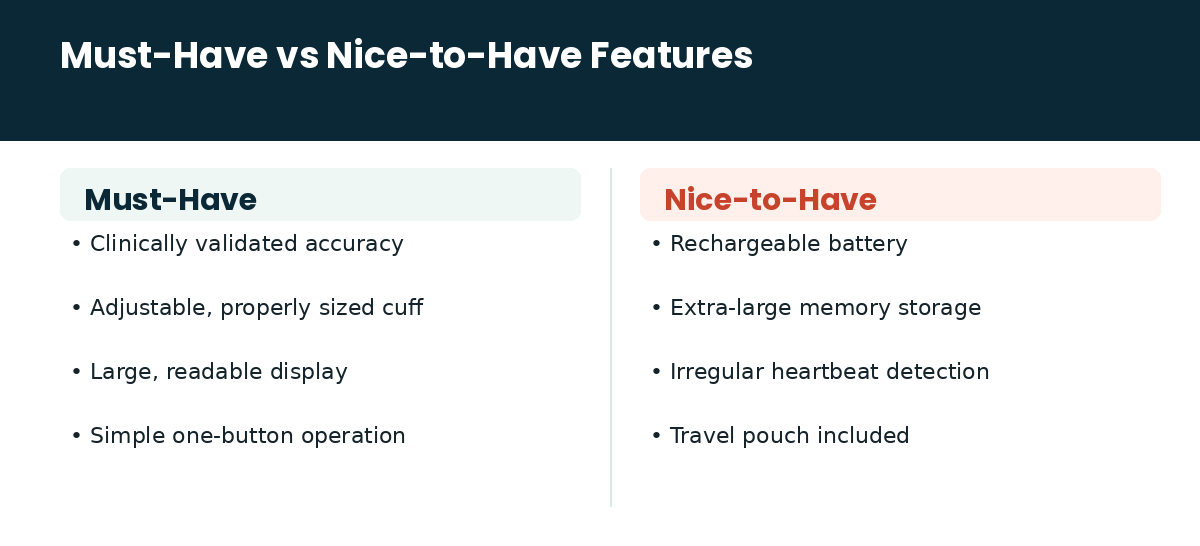
Some features are genuinely essential for a home-use device, while others are pleasant extras that do not make or break the purchase. Clinically validated accuracy is non-negotiable, since it is the entire point of owning the device. An adjustable, properly sized cuff is essential too, since a poor fit directly undermines your readings. A large, readable display and simple one-button operation are what actually make the device usable day to day, particularly for older family members.
On the nice-to-have side, a rechargeable battery is convenient but not essential, extra-large memory storage is helpful for tracking long-term trends but not critical for basic use, irregular heartbeat detection can be a useful bonus for some users, and a travel pouch is a small convenience rather than a genuine necessity for a device that will mostly stay at home.
Red Flags to Avoid When Choosing a Home Monitor
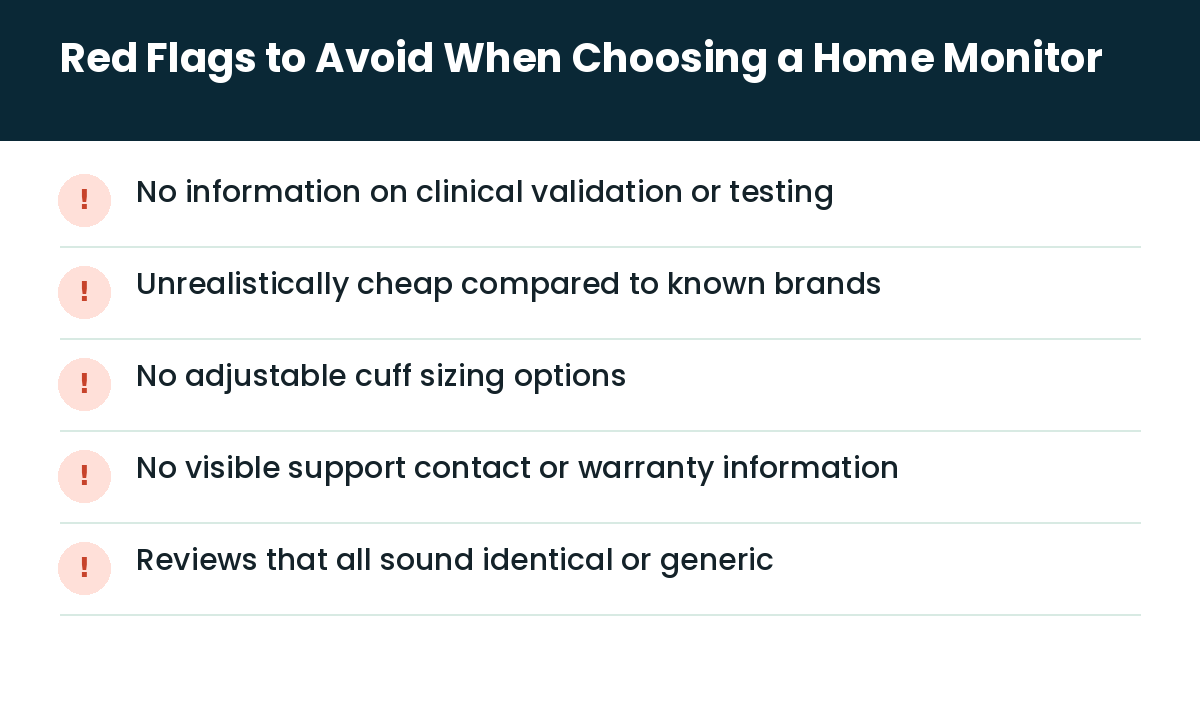
Certain warning signs should make you think twice before buying. Be cautious of any device with no information at all about clinical validation or testing, since this is the single most important quality indicator for a health device. Be skeptical of a monitor priced dramatically below known, established brands, since this often signals cut corners in accuracy or build quality. A monitor with no adjustable cuff sizing options limits how well it can fit different users in your household. The absence of any visible support contact or warranty information is a sign you may be left without help if something goes wrong. And reviews that all sound suspiciously identical or generic are often a sign of manipulated or fake feedback rather than genuine customer experiences.
Ideal For These Home Situations
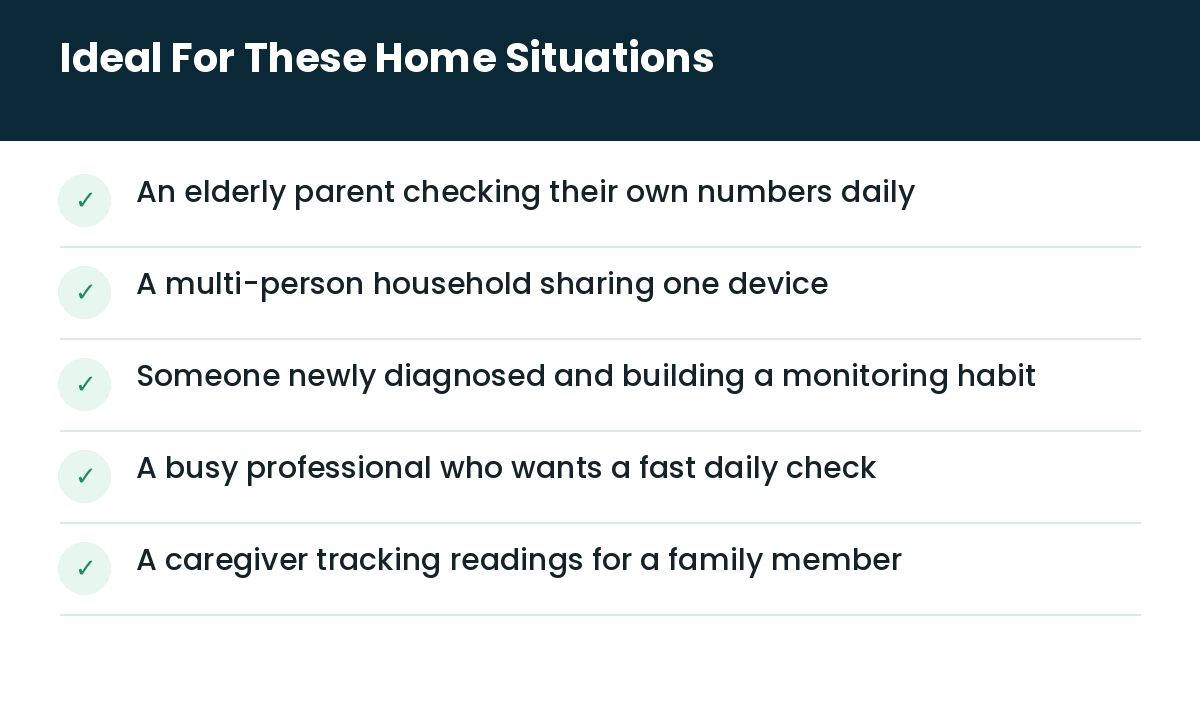
A well-chosen wrist monitor genuinely earns its place in a range of common household situations. It works well for an elderly parent checking their own numbers daily and independently. It suits a multi-person household sharing a single device across different family members. It helps someone newly diagnosed with high blood pressure build a consistent monitoring habit from the start. It fits neatly into a busy professional’s routine who wants a fast, no-fuss daily check. And it supports a caregiver who needs to track readings for a family member who cannot easily monitor themselves.
Why “Simple” Beats “Feature-Rich” for Most Homes
It is tempting to assume more features automatically means a better device, but for home use specifically, simplicity often wins. A monitor with too many buttons, modes, or settings can actually become a barrier to consistent use, particularly for older users or anyone who just wants a quick daily number without navigating a menu. The best home monitors tend to do a small number of things extremely well: accurate measurement, clear display, and simple memory tracking, rather than trying to be a comprehensive health gadget.
Testing the Device Once It Arrives
Once your monitor arrives, it is worth spending a few minutes getting familiar with it before relying on it daily. Read through the included instructions fully, even if the device seems intuitive. Take a few practice readings to get comfortable with correct wrist positioning. If possible, compare an early reading against a professional measurement at your next clinic visit, simply to build confidence that your specific device and your technique together are producing trustworthy numbers.
Our Recommendation
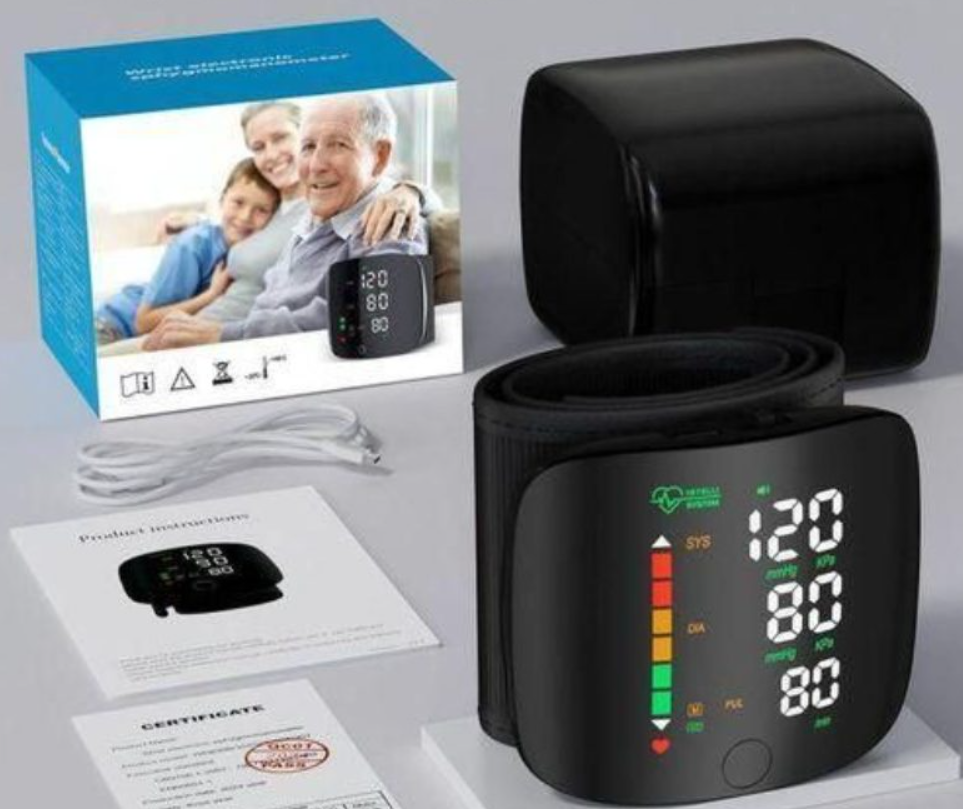
For most Nigerian households, our Digital Wrist Blood Pressure Monitor checks every must-have box on this list, validated accuracy, an adjustable cuff, a large display, and a memory function, all at a reasonable price. If portability is also a priority for your household, our Portable Digital Wrist Blood Pressure Monitor offers the same reliability in a travel-friendly form, and our standard Wrist BP Monitor is a solid, simpler alternative if you want to keep costs down.
How Home Use Differs From Clinical or Occasional Use
It is worth pausing on why home use specifically changes what “best” means. A device used occasionally, say, once during a rare doctor’s visit, can tolerate a bit more complexity, since a trained professional is likely operating it. A device used daily by a household, sometimes by an elderly relative or someone with no medical background, needs to be nearly foolproof. This is why the features that matter most for home use, simplicity, a large display, and dependable one-touch operation, are different from the features that might matter most in a clinical setting, where a professional using more advanced equipment is less concerned with ease of use.
Setting Realistic Expectations
Even the best home-use monitor will not replace professional medical care, and it is worth setting that expectation clearly from the start. What it will do is give you and your doctor a much richer, more consistent picture of your blood pressure over time than occasional clinic visits alone ever could. Approaching your purchase with this realistic expectation, a genuinely useful daily tool rather than a medical diagnostic replacement, helps you choose sensibly and use the device appropriately once it arrives.
Involving the Whole Household in the Decision
If more than one person will be using the device, it is worth briefly involving them in the decision before you buy, particularly if an older relative will be a primary user. Ask directly whether they would find a smaller wrist cuff more comfortable than a bulkier arm cuff, whether the display text looks large enough for them to read comfortably, and whether the single-button operation feels manageable. A device that technically has great specifications but that the actual intended user finds intimidating or uncomfortable will not deliver the consistent daily use that makes home monitoring valuable in the first place.
Frequently Asked Questions
Do I need a monitor with irregular heartbeat detection? Only if you have a known heart rhythm condition or your doctor has specifically recommended monitoring for it. For most healthy adults, this feature is a nice bonus rather than a necessity.
Is a bigger memory capacity actually useful for a typical household? Yes, to a reasonable degree. Being able to store weeks or months of readings makes it much easier to spot genuine trends rather than reacting to single numbers, which is valuable for almost any home user tracking regularly.
What is a reasonable price range for a home-use wrist monitor in Nigeria? Expect to pay around twenty thousand naira for a validated, reliable device with the core must-have features covered in this guide.
Should I prioritize brand reputation over specific features? Both matter, but an established, accountable seller with genuine support is often more important than any single extra feature, since it protects you if something does go wrong with the device.
How do I know if a cuff size will fit everyone in my household? Most adjustable wrist cuffs, including ours, are designed to fit the wrist sizes of the vast majority of adults. If anyone in your household has an unusually small or large wrist, reach out to our team before ordering for guidance.
For more buying advice like this, visit the ClinicAid blog.

Digi Clinicaid Nigeria Ltd is an online medical marketplace in Nigeria.