Once you start checking your blood pressure at home, the numbers on the screen only mean something if you understand how to interpret them. This is especially true for wrist monitor users, since knowing what counts as a normal reading, and when a number is worth paying attention to, is what turns your daily check from a habit into something genuinely useful for your health.
What “Normal” Actually Means
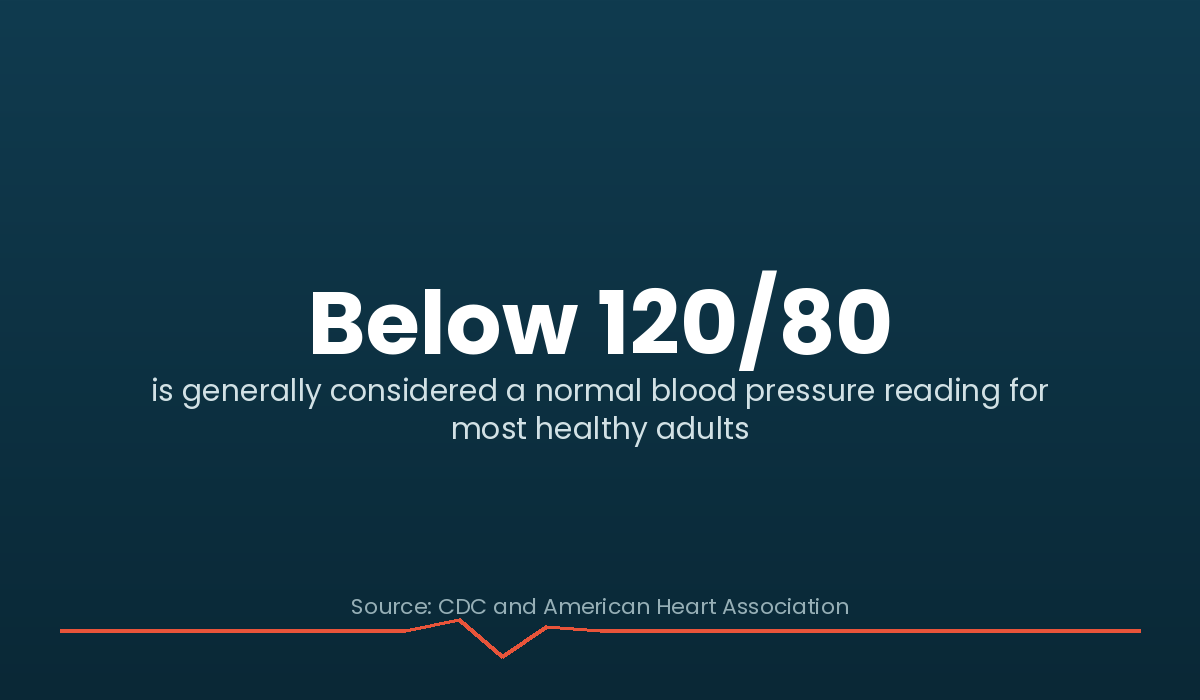
A normal blood pressure reading, whether taken at the wrist or the upper arm, is generally considered to be below 120/80 mmHg. This is not a Nigeria-specific or wrist-specific number, it is the same benchmark used globally by major health organizations, including the CDC, which defines normal blood pressure as under 120/80 mmHg (CDC on high blood pressure).
The two numbers mean different things. The first, or top, number is your systolic pressure, the force in your arteries when your heart beats. The second, or bottom, number is your diastolic pressure, the force when your heart rests between beats. Both matter, and doctors look at them together rather than in isolation.
The Full Blood Pressure Category Chart
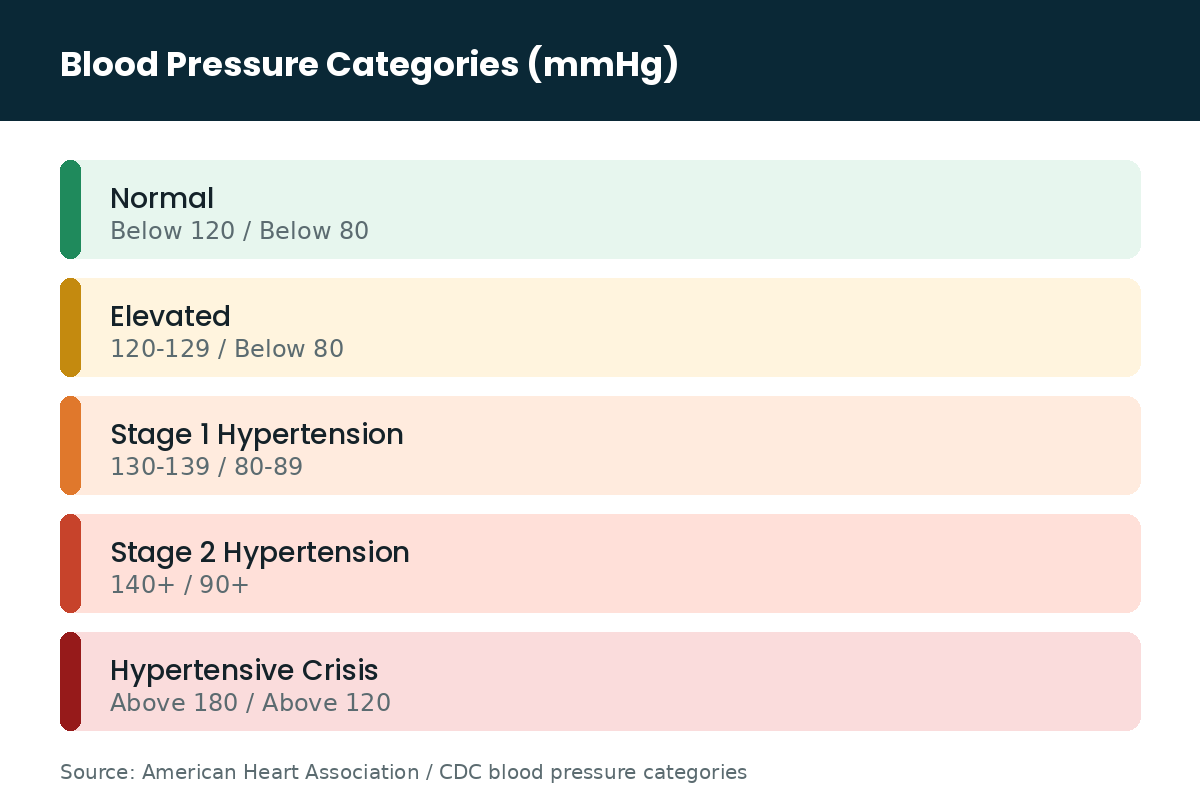
Beyond “normal,” there are several other categories worth knowing. Elevated blood pressure sits between 120 to 129 systolic, with diastolic still below 80. Stage 1 hypertension is defined as 130 to 139 systolic, or 80 to 89 diastolic. Stage 2 hypertension is 140 or higher systolic, or 90 or higher diastolic. And a reading above 180/120 mmHg is considered a hypertensive emergency requiring immediate medical attention, not something to simply monitor at home (American Heart Association on understanding blood pressure readings).
Does “Normal” Look Different on a Wrist Monitor?
This is a common and reasonable question. The short answer is no, the same ranges apply whether your reading comes from a wrist monitor or an arm monitor. What differs is not the target number, but how easily a wrist reading can be thrown off by incorrect technique. A wrist monitor held below heart level, for example, can show a falsely high number that looks like elevated blood pressure when your actual pressure is normal.
This is why technique matters so much with wrist monitors specifically. Before assuming a reading reflects a real health concern, make sure you followed the basics: sitting quietly for a few minutes beforehand, wrist positioned level with your heart, and staying still during the measurement. A single unusual reading is often a technique issue rather than a genuine health change.
Why One Reading Is Not the Whole Picture
Blood pressure naturally fluctuates throughout the day based on stress, physical activity, sleep, and even what you last ate or drank. A single high reading, especially a first-thing-in-the-morning one, does not automatically mean you have hypertension. What matters far more is the pattern over several days or weeks.
This is part of why the American Heart Association recommends taking two readings, about a minute apart, each time you check, and looking at trends over time rather than reacting to any single number (AHA guidance on accurate blood pressure measurement).
When to See a Doctor About Your Reading
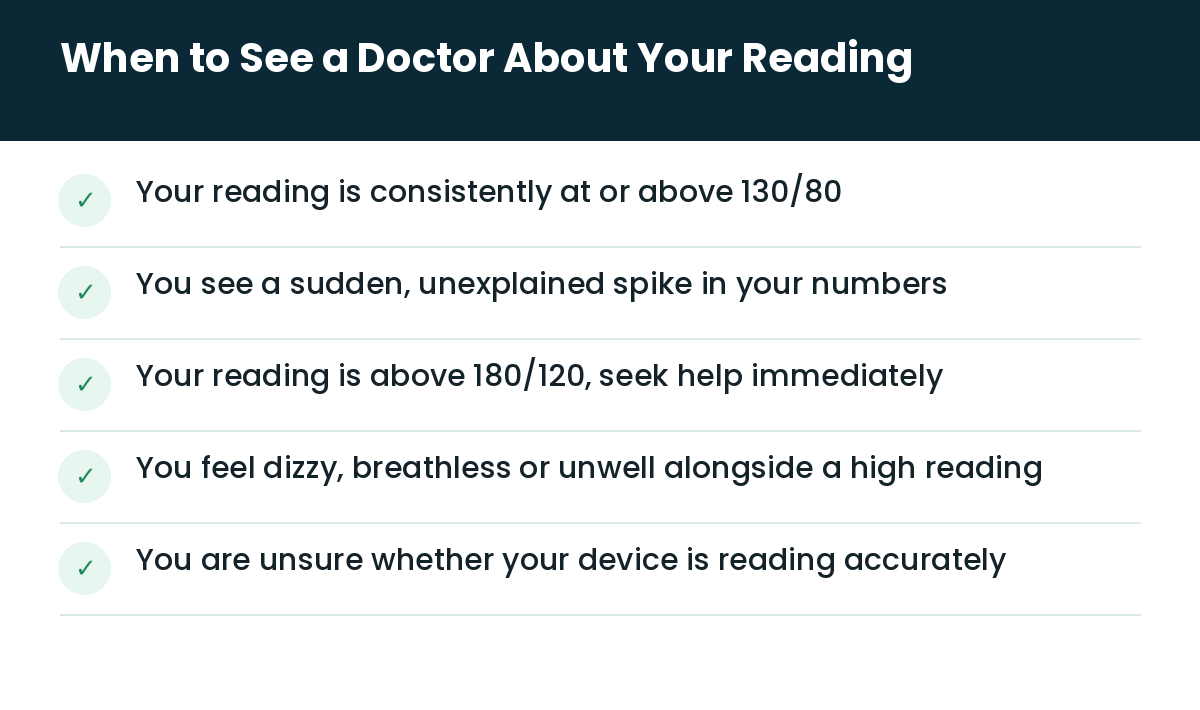
There are clear signs that a reading deserves professional attention rather than just continued home tracking. If your numbers are consistently at or above 130/80 mmHg across several days, that is worth discussing with a healthcare professional. A sudden, unexplained spike from your usual pattern is also worth flagging. Any reading above 180/120 mmHg needs immediate medical attention, especially if paired with symptoms like chest pain, shortness of breath, or vision changes. And if you feel dizzy or unwell alongside a high reading, do not wait it out at home. Finally, if you are ever unsure whether your device itself is reading accurately, it is worth bringing it to a clinic visit to compare against a professional measurement.
Building a Habit of Understanding, Not Just Measuring
Owning a blood pressure monitor is only half the value. The other half is actually understanding what your numbers mean so you can act on them appropriately, neither panicking over a single elevated reading nor ignoring a genuine pattern that needs attention. Keeping a simple log, or using a monitor with a built-in memory function, makes this far easier over time.
A Monitor Built for Everyday Tracking
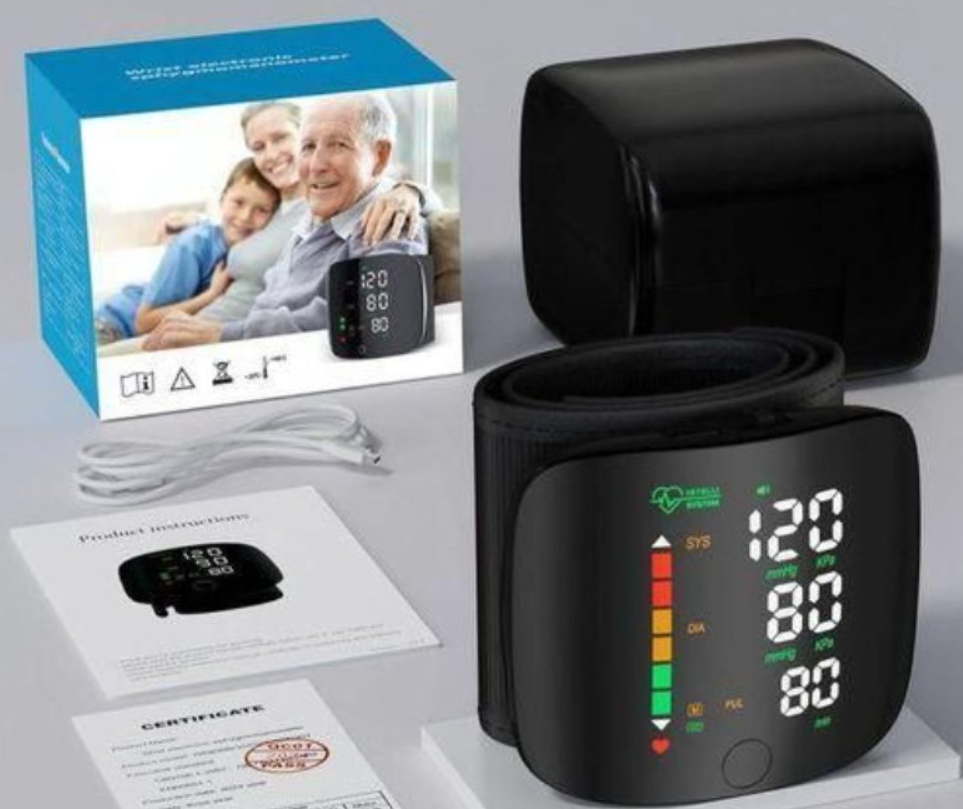
Our Digital Wrist Blood Pressure Monitor includes a memory function specifically so you can track your numbers over time, not just react to one reading in isolation. For those who want the same reliable tracking on the move, our Portable Digital Wrist Blood Pressure Monitor is built to travel well, and our standard Wrist BP Monitor is a dependable everyday option.
Final Thoughts
A normal blood pressure reading is below 120/80 mmHg, regardless of whether you measured it at your wrist or your arm. What changes with a wrist monitor is how carefully you need to follow correct technique to trust that number. Understand the categories, watch for patterns rather than single readings, and know the warning signs that mean it is time to speak with a doctor.
For more guidance on understanding your numbers, visit the ClinicAid blog.
Tracking Your Own Normal Over Time
Beyond the general population ranges, it is worth paying attention to what is normal specifically for you. Some people naturally run slightly lower or higher than the population average without it indicating any health problem. Once you have measured consistently for a few weeks, you will start to see your own personal baseline, and that baseline, along with any meaningful shifts away from it, is often more useful to you and your doctor than comparing yourself strictly against the general chart alone.
Frequently Asked Questions
Is a normal blood pressure reading the same for every age group? The general targets used by most health bodies, below 120/80 mmHg as normal, apply broadly to healthy adults, though your doctor may set a different personal target based on your age, existing conditions, or medication. Children and teenagers have different normal ranges entirely and should be assessed by a pediatrician.
Can normal blood pressure still mean something is wrong? Blood pressure is just one indicator of cardiovascular health among several. A normal reading is reassuring, but it does not rule out every possible health concern. Regular checkups that look at your overall health picture remain important alongside home monitoring.
Why is my blood pressure normal at the clinic but higher at home, or the reverse? Both patterns are recognized in medicine. Higher readings at the clinic than at home is often called white coat hypertension, caused by the stress of a medical setting. The reverse, called masked hypertension, is why home monitoring is genuinely valuable, since it can catch elevated blood pressure that a single clinic visit might miss entirely.
Should I be concerned about low blood pressure readings too? Yes, very low readings, generally below 90/60 mmHg, can also be a concern, particularly if accompanied by dizziness, fainting, or fatigue. If you consistently see low readings alongside these symptoms, it is worth discussing with a doctor rather than focusing only on high numbers.
How quickly can lifestyle changes bring an elevated reading back to normal? This varies significantly by individual, but many people see meaningful improvement within a few weeks to a few months of consistent changes, such as reducing salt intake, increasing physical activity, and managing stress. Tracking your numbers regularly with your wrist monitor is a good way to see whether these changes are actually working for you.

Digi Clinicaid Nigeria Ltd is an online medical marketplace in Nigeria.