Prices for wrist blood pressure monitors in Nigeria vary more than you might expect, from suspiciously cheap unbranded devices to well-known brands charging a noticeable premium. Understanding what actually drives that price difference helps you spend your money on the features that matter, rather than paying extra for things that do not meaningfully affect your health outcomes, or worse, underpaying for a device that cannot be trusted.
What Affects the Price
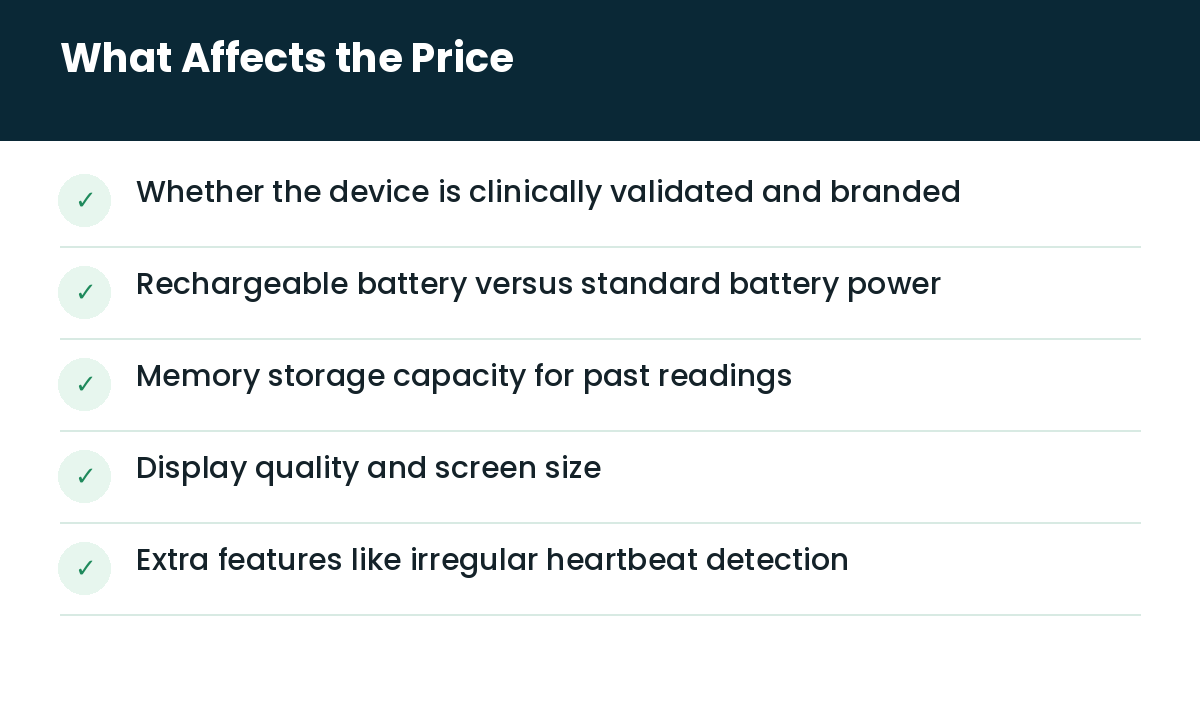
Several genuine factors influence what a wrist monitor costs. Whether the device is clinically validated and produced by an accountable, established brand plays a major role, since validation testing and quality manufacturing both add real cost. Rechargeable battery technology typically costs more than standard battery-powered designs. Memory storage capacity, how many past readings the device can hold, can affect price, with larger capacity generally costing a bit more. Display quality and screen size matter too, with larger, higher-contrast displays sometimes adding to the cost. And extra features, like irregular heartbeat detection or smartphone connectivity, can push the price higher, whether or not you actually need them.
Cheap vs Fairly Priced Devices
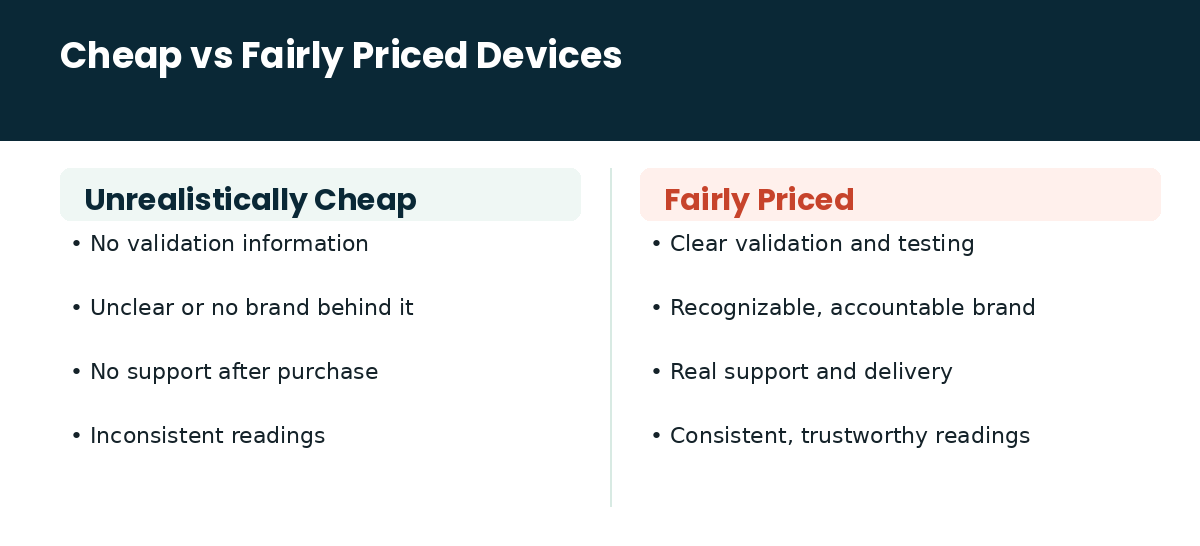
It helps to recognize the difference between a device that is simply affordable and one that is unrealistically, suspiciously cheap. An unrealistically cheap device typically comes with no validation information at all, an unclear or entirely absent brand behind it, no support available after purchase, and often inconsistent readings that undermine the entire point of owning it. A fairly priced device, even at a modest price point, should offer clear validation and testing information, a recognizable and accountable brand, real support and reliable delivery, and readings that stay consistent across repeated measurements.
Why the Cheapest Option Often Costs More in the Long Run
It is tempting to default to whichever listing has the lowest price, but this can be a false economy for a health device specifically. An inaccurate monitor does not just waste the money you spent on it, it can actively mislead you about your own health, either causing unnecessary worry over a falsely high reading or, more dangerously, providing false reassurance while your actual blood pressure quietly climbs. The modest difference between an unbranded budget device and a validated, reasonably priced one is a small price to pay for numbers you can actually trust.
What a Reasonable Price Looks Like in Nigeria
For context, a validated digital wrist blood pressure monitor from an established seller typically costs around twenty thousand naira in Nigeria. This price generally reflects genuine validation testing, a properly adjustable cuff, a usable display, and some form of memory function, the core features that actually matter for reliable home monitoring. Prices meaningfully below this range are worth scrutinizing carefully before you buy, while prices well above it are often paying for extra convenience features rather than a meaningful difference in core accuracy.
Delivery and Support Are Part of the Price Too
When comparing prices across sellers, it is worth remembering that the sticker price is not the whole picture. A slightly higher price from a seller offering reliable nationwide delivery, responsive customer support, and a real accountable business behind the product often represents better overall value than a marginally cheaper device from an anonymous listing with no support if something goes wrong. Factor in what happens after your purchase, not just the number on the price tag.
Is It Worth Paying More for Rechargeable or Extra Memory?
This depends entirely on how you plan to use the device. If you intend to check daily or more, the extra cost of a rechargeable battery can pay for itself over time by eliminating recurring battery purchases. If you plan to track your readings over months and want a rich history to review with your doctor, extra memory capacity adds genuine value. If you are simply looking for basic, occasional monitoring, a more affordable model without these extras may serve you perfectly well without paying for capabilities you will not use.
Comparing Local Prices Against Imported Options
Some buyers consider importing a monitor from an international marketplace, hoping for a lower price. While this can occasionally work out, it often introduces hidden costs and risks that are not obvious upfront: customs delays, additional import charges, uncertain warranty coverage, and no easy path to support or replacement if the device arrives faulty or performs poorly. When you factor in these realistic risks, a fairly priced device from an established Nigerian seller frequently ends up being the better value overall, even if the sticker price looks slightly higher at first glance.
Thinking About Price as a Long-Term Investment
A wrist blood pressure monitor, used properly, is not a disposable purchase, it is a tool you are likely to rely on for years. Viewed over that timeframe, even a meaningful price difference between a validated device and a suspiciously cheap alternative amortizes down to a genuinely small amount per year of use. This perspective makes it easier to prioritize accuracy and reliability over chasing the absolute lowest upfront price, particularly for something directly tied to your health.
Where to Buy at a Fair Price in Nigeria
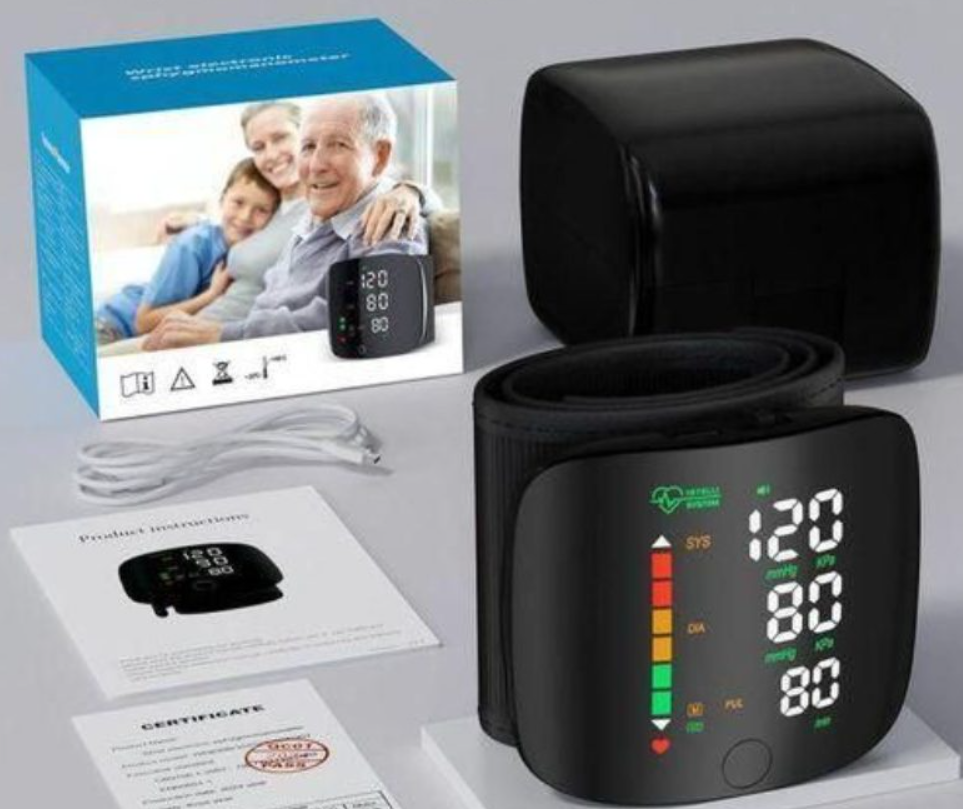
ClinicAid prices its wrist monitors to reflect genuine value rather than cutting corners to compete on price alone. Our Digital Wrist Blood Pressure Monitor is priced at twenty thousand five hundred naira, covering validated accuracy, a properly adjustable cuff, a clear display, and a memory function, with nationwide delivery included. If portability is a priority, our Portable Digital Wrist Blood Pressure Monitor offers the same core value in a travel-friendly design, and our standard Wrist BP Monitor provides a dependable, accessible entry point for households working with a tighter budget.
Frequently Asked Questions
Is it normal for prices to vary significantly between sellers for what looks like the same device? Yes, and this variation often reflects real differences in validation, quality control, and after-sales support, even when listings look similar on the surface. Always look past the photo and price alone before deciding.
Should I ever negotiate on price for a health device like this? Some sellers may offer reasonable flexibility, particularly for bulk or repeat orders, but be cautious of any seller willing to drop price dramatically with little explanation, as this can sometimes signal cut corners elsewhere.
Does a higher price always guarantee better accuracy? Not necessarily. Beyond a certain baseline of genuine validation and quality manufacturing, additional price increases often reflect convenience features rather than meaningfully better core accuracy.
Are there hidden costs I should watch for beyond the sticker price? Watch for delivery fees, since some sellers advertise a low product price but add substantial shipping costs at checkout. Confirm the full, final price before completing your purchase.
Is financing or installment payment available for a blood pressure monitor? This varies by seller. Reach out to your chosen seller directly to ask about available payment options if the full upfront cost is a barrier for your household.
Do prices typically change around certain times of year in Nigeria? Some sellers run promotions around holidays or sales events, so it can be worth watching for genuine discounts from an established seller rather than assuming the lowest price is always available immediately. Avoid rushing into an unfamiliar, unverified seller purely because of a tempting temporary discount.
For more buying guidance and price comparisons, visit the ClinicAid blog.

Digi Clinicaid Nigeria Ltd is an online medical marketplace in Nigeria.