Buying a blood pressure monitor in Nigeria comes with a few practical considerations that generic international buying guides do not usually cover. Delivery reliability, power supply habits, price sensitivity, and access to genuine, validated devices all shape which option actually makes sense for a Nigerian household. Here is a comparison built specifically around those realities.
Local Buying Considerations That Matter
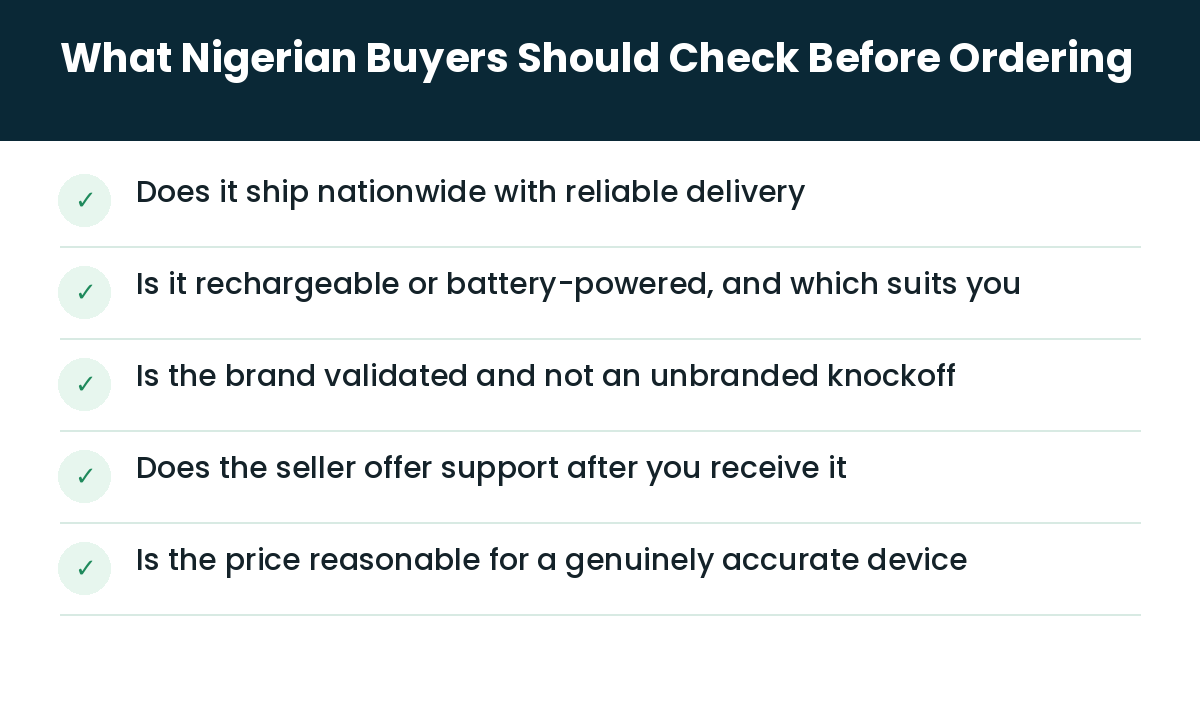
Before comparing wrist and arm monitors directly, it helps to know what separates a good purchase from a disappointing one in the Nigerian market specifically. Check whether the seller genuinely ships nationwide with reliable delivery, since a great device is no use if it never reaches you. Decide whether a rechargeable or battery-powered device suits your household better, particularly if you experience frequent power interruptions and want to avoid constantly buying replacement batteries. Be cautious of unbranded, unvalidated devices sold purely on price, since accuracy is the entire point of owning a monitor at all. Look for a seller who offers real support after you receive the device, not just a one-time sale. And weigh the price against what you are actually getting, a reasonably priced, validated device is a far better investment than the cheapest option available.
Wrist vs Arm for Nigerian Households
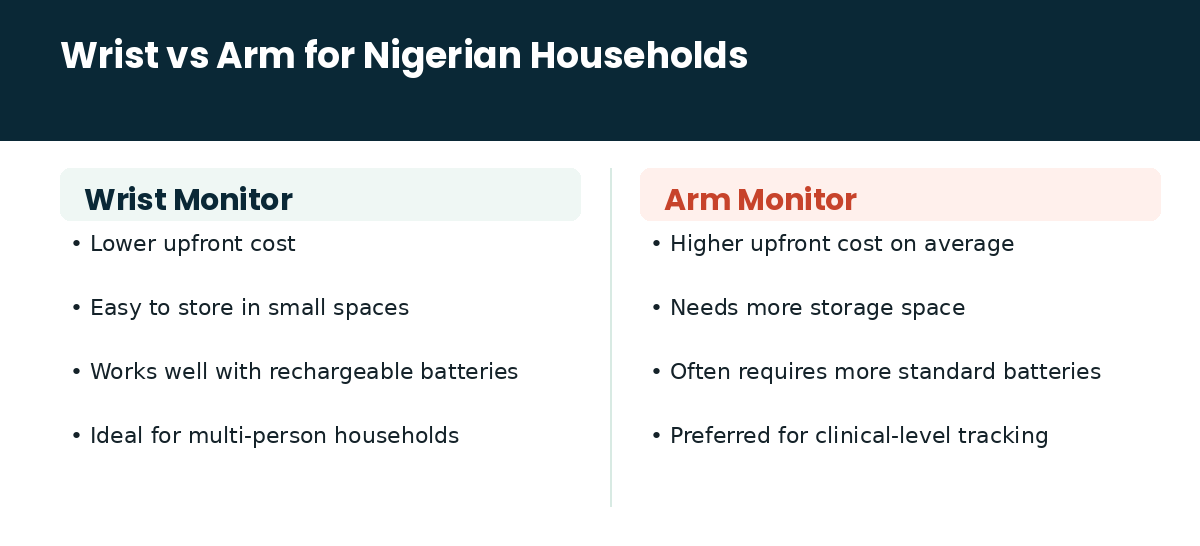
Wrist monitors tend to have a lower upfront cost, which matters for many households, and their compact size makes them easy to store in smaller living spaces, common in many Nigerian homes and apartments. They also pair well with rechargeable battery options, reducing the ongoing cost and hassle of buying batteries repeatedly. For households monitoring blood pressure across multiple family members, perhaps a working adult and an elderly parent, the lower cost per unit makes it more practical to have more than one device in the house.
Arm monitors generally cost more, need more storage space, and more commonly rely on standard batteries rather than rechargeable options, though this varies by model. They remain the preferred choice for households managing a diagnosed heart condition where clinical-level consistency matters most.
The Power Supply Question
This is a genuinely Nigeria-specific consideration that international buying guides rarely mention. If your household experiences frequent power outages, a rechargeable device requires you to remember to charge it during periods when power is available, while a battery-powered device simply needs a spare set of batteries on hand at all times. Neither approach is wrong, but it is worth thinking through which fits your household’s actual habits before you buy, rather than assuming rechargeable is automatically more convenient.
Delivery and Availability
One advantage of buying from a Nigerian supplier directly, rather than importing through an international marketplace, is delivery speed and accountability. Orders placed with a local supplier like ClinicAid are typically processed and dispatched within the same day, with a real support team you can call if something goes wrong. Importing a device from abroad can mean weeks of waiting, unpredictable customs handling, and no local support if the device arrives faulty.
How to Order From ClinicAid
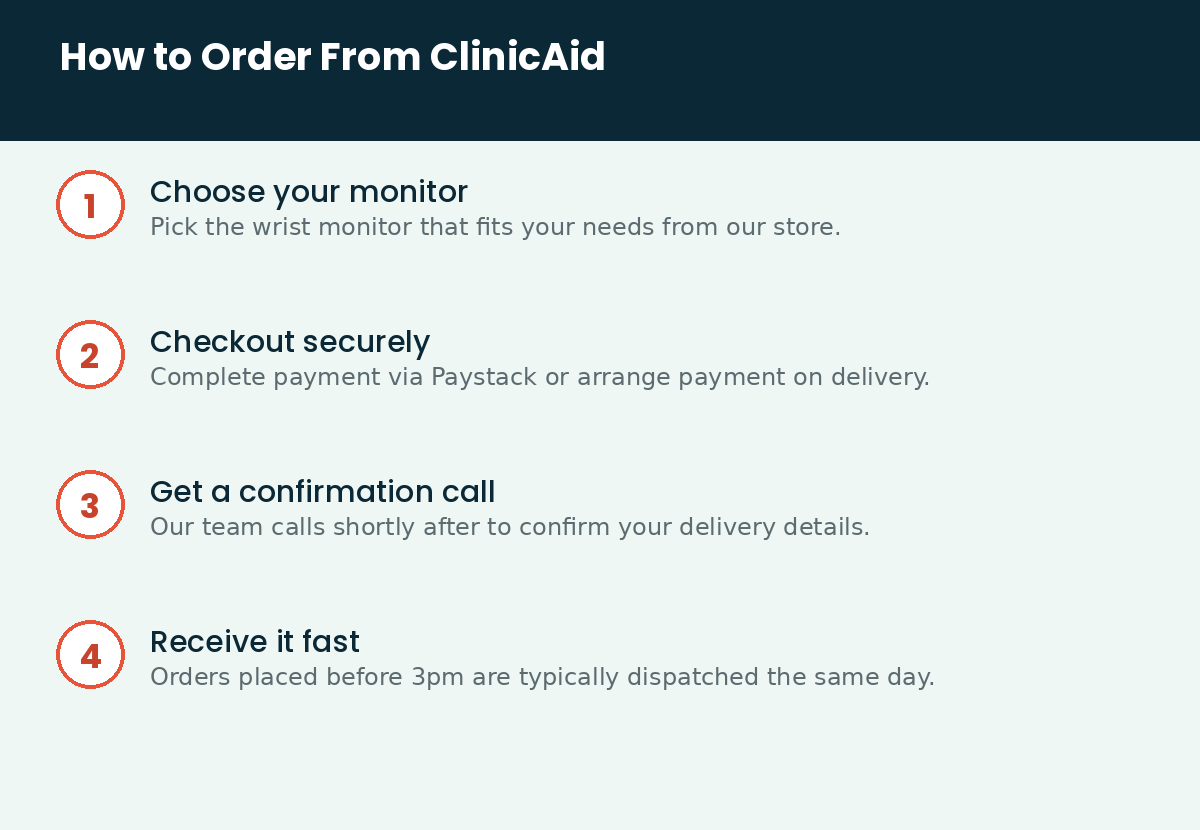
Ordering is designed to be simple. First, choose the wrist monitor that fits your needs from our store. Second, complete checkout securely through Paystack, or arrange payment on delivery if you prefer. Third, our team calls you shortly after to confirm your delivery details and answer any questions. Fourth, your order ships fast, with orders placed before 3pm typically dispatched the very same day.
Making the Right Choice for Your Household
For most Nigerian households, a validated digital wrist monitor offers the best balance of cost, convenience, and reliability. It is the more accessible entry point for families managing tight budgets, while still providing genuinely useful, trend-worthy data for daily health tracking. Reserve an arm monitor specifically for situations where a doctor has recommended it for clinical reasons, such as an existing heart condition requiring closer monitoring.
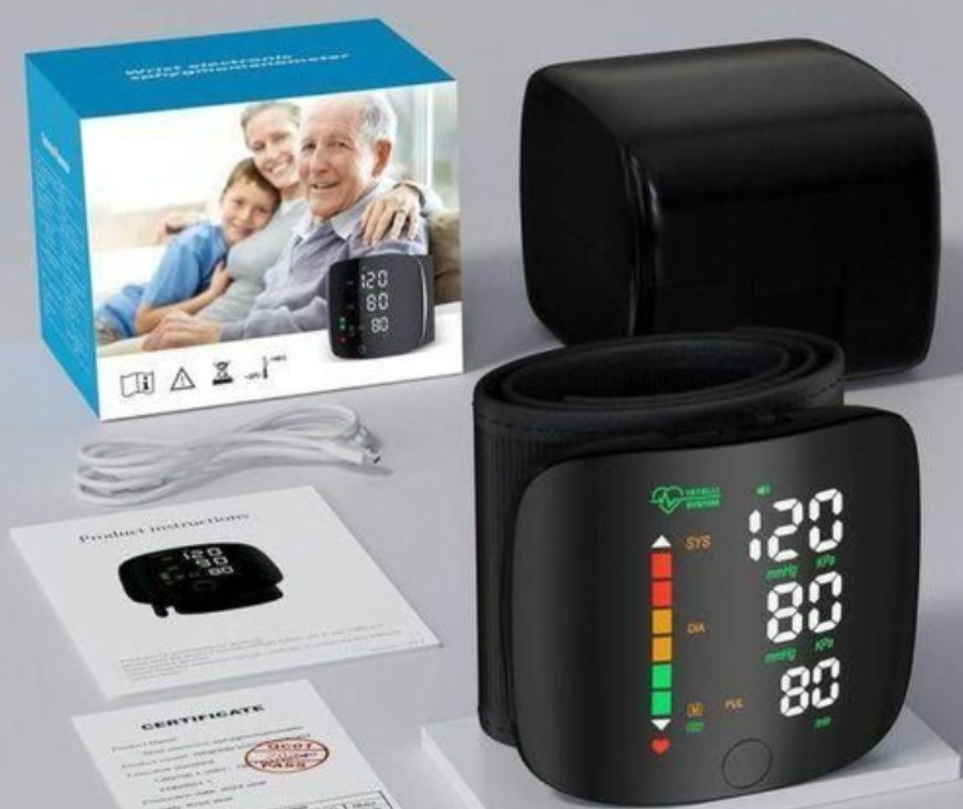
Our Digital Wrist Blood Pressure Monitor is built and priced for exactly this kind of everyday household use, with nationwide delivery and real support after your purchase. If portability matters to you as well, consider our Portable Digital Wrist Blood Pressure Monitor, or browse our standard Wrist BP Monitor for a dependable everyday option.
Avoiding Counterfeit and Unbranded Devices
Nigeria’s online marketplaces, like many around the world, include a mix of genuine, validated health devices and cheaper, unbranded alternatives that make similar claims without the testing to back them up. This matters more for a blood pressure monitor than for most other purchases, since an inaccurate device does not just waste your money, it can genuinely mislead you about your own health. Before buying from an unfamiliar seller, look for clear product information, a real physical business address, and reviews or a track record you can actually verify, rather than relying purely on the lowest listed price.
Warranty and After-Sales Support
This is another area where local, established sellers tend to outperform anonymous marketplace listings. A supplier based in Nigeria, reachable by phone or WhatsApp, can address a faulty device, answer usage questions, or help you understand a confusing reading in a way that a distant, overseas seller simply cannot. When comparing prices between sellers, factor in this after-sales support as part of the value you are actually paying for, not just the sticker price of the device itself.
Climate and Storage Considerations
Nigeria’s warmer climate is worth a brief mention too. Most digital blood pressure monitors are built to tolerate normal household temperatures without issue, but it is still good practice to avoid leaving your device somewhere it will sit in direct sunlight for extended periods, such as on a windowsill or in a parked car, since extreme heat can affect both the battery and the internal electronics over time. Storing your monitor in its case, in a normal room-temperature drawer or cupboard, is enough to keep it working reliably for years.
Frequently Asked Questions
How long does delivery typically take within Nigeria? Orders placed before 3pm are typically dispatched the same day, with delivery timing afterward depending on your location. Our team confirms an estimated delivery window when they call to confirm your order.
Is it safe to pay online for a health device in Nigeria? Yes, checkout through a reputable, established payment processor like Paystack uses secure, encrypted transactions, the same technology used across major Nigerian e-commerce platforms. You can also arrange payment on delivery if you would prefer not to pay online.
What happens if my device arrives faulty? Reach out to our support team through the contact details on our site as soon as you notice an issue. Buying from a local, accountable supplier means you have a real point of contact to resolve problems quickly, unlike many imported devices bought through anonymous international marketplaces.
Are rechargeable wrist monitors worth the extra cost in Nigeria? For many households, yes, particularly if you check your blood pressure daily and want to avoid the recurring cost of standard batteries. If your power supply is unpredictable, though, make sure you have a realistic plan for keeping it charged.
Does ClinicAid deliver to all states in Nigeria, not just Lagos? Yes, delivery is available nationwide, not limited to Lagos or major cities alone. Delivery timing can vary depending on your specific location, which our team will confirm with you directly after you place your order.
For more Nigeria-specific buying guides, visit the ClinicAid blog.

Digi Clinicaid Nigeria Ltd is an online medical marketplace in Nigeria.